A non-profit coffee shop business plan is a formal document that does two jobs at once: it convinces funders that your mission is credible and your governance is sound, and it proves to yourself and your team that the shop can cover its costs and sustain its purpose.
Those two audiences read the same document differently. Funders go straight to your mission statement and surplus allocation policy. Landlords and equipment suppliers look at your startup budget and cash-flow forecast. Your board, if you have one, wants the operational plan to be airtight. Get this right from the start, and the plan becomes a working tool rather than a document that sits on a shelf.
A non-profit coffee shop is not simply a café with good intentions. It is a legal entity whose surplus must be reinvested into its stated mission rather than distributed to owners or shareholders. That constraint shapes every section of your business plan, from how you describe revenue to how you account for volunteer labour. Understanding coffee shop profit margins in the for-profit sector gives you a realistic baseline before you model your own numbers. Then build your financials around your non-profit structure, not the other way around.
Legal Structure: Choosing the Right Non-Profit Model
Your legal structure determines what you can call yourself, which grants you can apply for, and what rules govern your surplus. The three most common structures for a community coffee shop are a registered charity (or 501(c)(3) equivalent in the US), a Community Interest Company (CIC in the UK), and a cooperative. Each has different filing requirements, governance obligations, and tax treatments that vary significantly by jurisdiction.
A registered charity gives you the strongest claim on grant funding and the clearest public trust signal. It typically requires a formal board, annual reporting to a regulator, and a strict asset lock: you cannot distribute surplus to founders. Filing fees and minimum asset requirements differ between countries and even between states or provinces. Check with your local regulator rather than relying on a single number.
A CIC or social enterprise structure gives you more operational flexibility and can issue community shares, but grant eligibility is narrower. Many grant-making bodies specifically require charitable status.
A cooperative distributes surplus to members rather than locking it into mission assets. That suits a worker-owned café but complicates grant applications that require a non-distribution constraint.
Before you register anything, get specific legal advice for your jurisdiction. The filing process, ongoing compliance costs, and governance minimums all affect your startup budget in ways no template can capture.
One structural choice that affects day-to-day operations: whether your coffee retail shop model includes retail product lines alongside espresso. That decision belongs in both your legal objects clause and your revenue model.
Mission Statement and Community Impact: What Funders Actually Read
Your mission statement is the first thing a grant officer reads and the lens through which they evaluate every other section. A weak mission statement does not just lose points on a scoring rubric. It makes the financial section look arbitrary, because the reader cannot tell what the money is supposed to achieve.
A fundable mission statement does three things in two or three sentences: it names the population you serve, states the specific change you intend to create for them, and explains why the coffee shop format is the mechanism rather than a coincidence.
Use this structural template as a starting point:
"[Organisation name] exists to [specific outcome] for [named community or population] by operating a community coffee shop that [specific mechanism: employs, trains, gathers, funds, etc.]. We measure our impact by [one or two concrete indicators]."
Funders are not moved by aspiration alone. They want indicators they can track across grant cycles. If your shop will provide employment training, name the number of trainees per cohort. If it will fund a specific community programme, describe the programme and how surplus is allocated to it.
Community impact belongs in your financial section, not just your narrative. Grant committees increasingly want to see a theory of change with a corresponding budget line. If you claim your café will generate surplus for a food bank, your financial projections need to show what surplus is realistic and when. Reviewing data on average revenue of a coffee shop helps you calibrate those expectations honestly.
Revenue Model: How a Non-Profit Coffee Shop Funds Its Mission
A non-profit coffee shop funds its mission through a mix of trading income, grants, donations, and, increasingly, non-beverage retail. No single stream is sufficient on its own, and grant committees will scrutinise how diversified your revenue is before committing multi-year funding.
Your core trading income comes from coffee and food sales. This is your most reliable and most controllable line, and it must cover daily operating costs before any surplus is directed to mission activities. The coffee shop retail element deserves its own section: merchandise, packaged goods, and locally made products can meaningfully lift revenue per customer visit without requiring extra staffing.
Grants and donations fund capital projects, programme delivery, and sometimes deficit periods in your first year. They are not operational income. A plan that depends on grants to cover staff wages is a solvency risk; grant cycles are uncertain and renewal is never guaranteed.
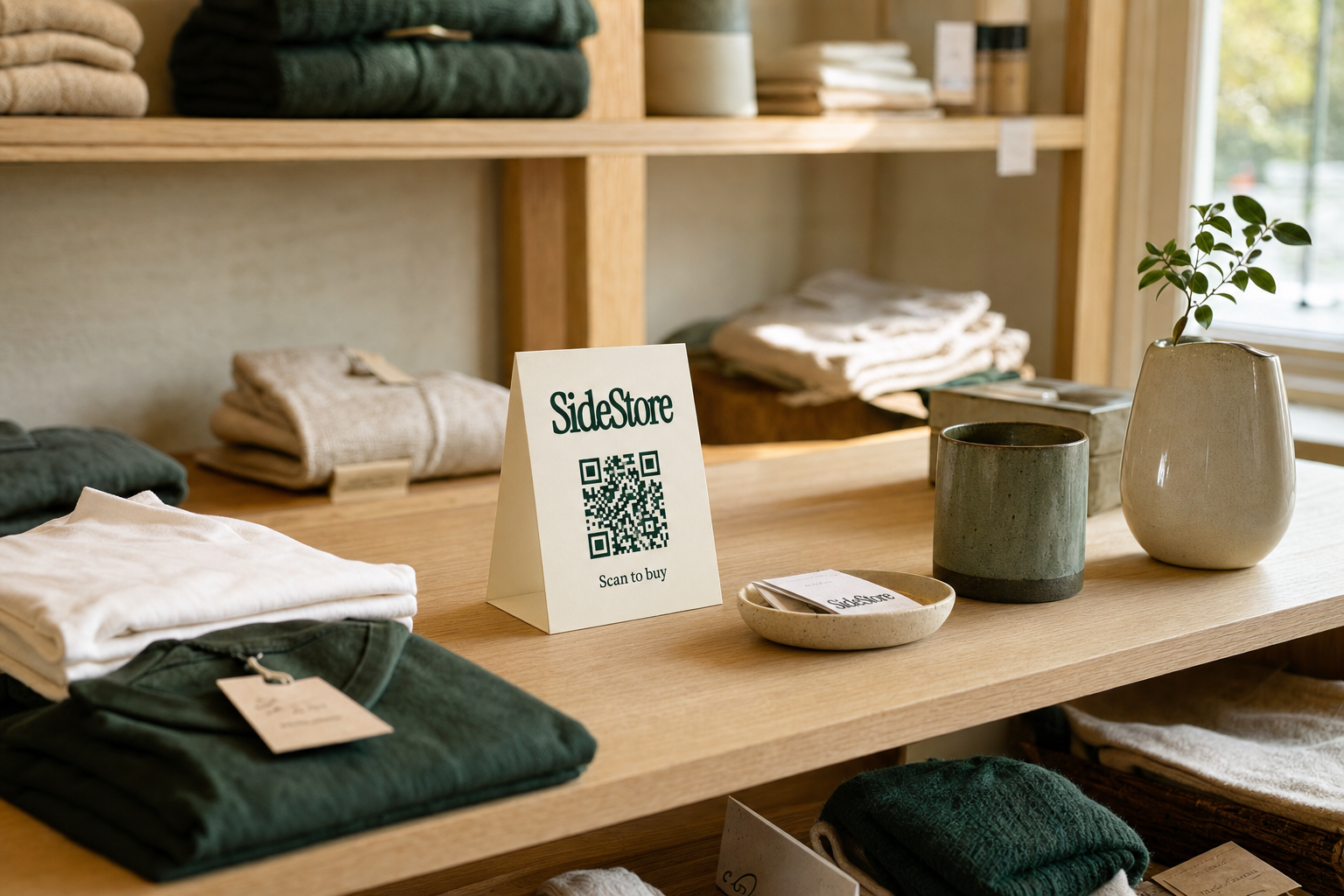
Consignment retail is an underused revenue line in non-profit coffee shops. When you stock products from local makers on consignment, you earn a commission when each item sells. You pay nothing upfront, carry no inventory risk, and never need to buy stock that might sit unsold. The maker supplies the product, you provide the shelf space and the customer, and the commission split is agreed in advance. Tools like the SideStore Retail Widget handle checkout, live stock tracking, and automatic split payouts, so the administrative overhead is low. For more on how this arrangement works from the maker's side, see selling to consignment.
Earned income from space hire, events, and membership schemes rounds out the model for many community cafés. Understand what how much profit does a coffee shop make looks like across different revenue mixes before you finalise your projections.
Non-Profit vs Social Enterprise vs Cooperative: A Side-by-Side Comparison
Choosing the wrong legal structure is one of the most costly early mistakes a community coffee shop can make. Unwinding it is expensive and slow. The table below gives you a direct comparison across the dimensions that matter most to a coffee shop operator.
| Structure | Surplus Rule | Grant Eligible | Board Required | Tax Treatment | Best For |
|---|---|---|---|---|---|
| Registered Charity | Reinvested in mission; no distribution | Yes, broadest eligibility | Yes, trustees required | Varies by jurisdiction; often exempt | Mission-first shops needing broad grant access |
| Social Enterprise / CIC | Surplus capped or asset-locked, rules vary | Partial; fewer grant bodies | Varies by structure | Varies by jurisdiction | Shops wanting trading flexibility with social purpose |
| Cooperative | Distributed to members | Limited; most grant bodies require non-distribution | Member governance required | Varies by jurisdiction | Worker-owned or member-owned community cafés |
| For-Profit (for comparison) | Distributed to owners freely | Not eligible | Not required | Standard corporation tax | Commercially operated cafés without a mission constraint |
The right structure depends on where your primary funding will come from. If grants are central to your first three years, charitable status is usually the most defensible choice. If you plan to generate most revenue through trading and want worker ownership, a cooperative makes more sense. Either way, consider how you will activate sharing retail space with local makers, because the commission income from consignment placements is available to all structures.
Startup Budget: What a Non-Profit Coffee Shop Actually Costs
Startup costs for a non-profit coffee shop vary significantly by city, lease terms, fit-out condition, and equipment specification. No single figure applies universally. A plan that presents a made-up benchmark as a target will lose credibility with any funder who has reviewed multiple applications.
Model these major cost categories:
Premises. Lease deposits, fit-out, and any landlord-required works. A shell unit costs considerably more to fit out than a premises with an existing kitchen or café infrastructure. Costs vary enormously between a rural town and a city centre.
Equipment. Commercial espresso machine, grinder, refrigeration, display cases, and point-of-sale hardware. Leasing equipment rather than buying it outright reduces your upfront capital requirement but increases monthly operating costs. Compare both scenarios in your plan.
Legal and registration. Filing fees for your chosen legal structure, solicitor or attorney fees for your governing documents, and any regulator-required minimum asset thresholds. These vary by jurisdiction, so get quotes specific to your location.
Working capital. Your first three to six months of operating costs before trading income stabilises. This is the figure most first-time operators underestimate. Stock, wages, utilities, and any grant-match requirements all draw on working capital before your customer base builds.
Contingency. Build a contingency line of at least ten percent of total startup costs. Fit-outs overrun, equipment deliveries delay, and permit processes slow.
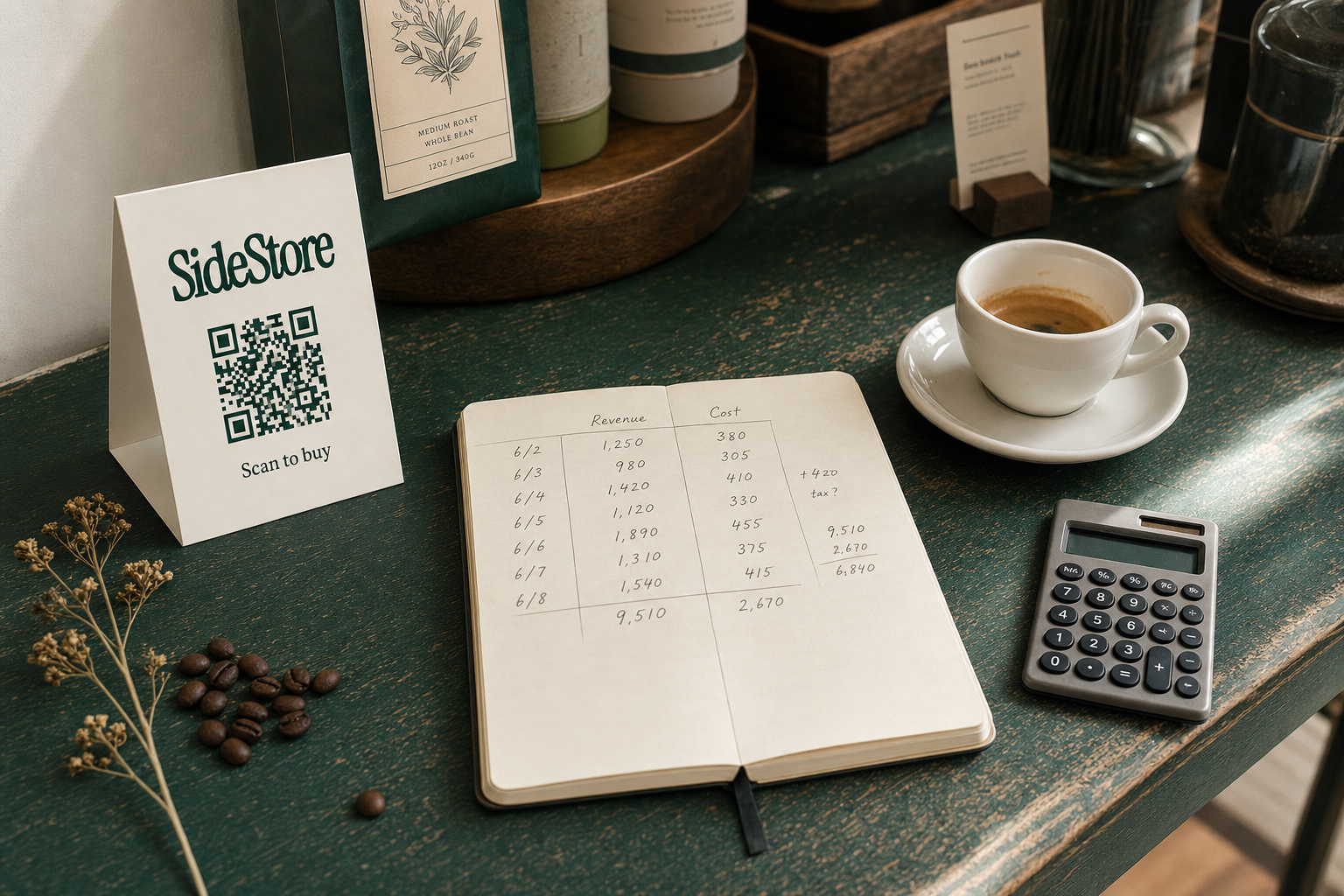
Model your full coffee shop profit and loss statement from the first month, not the first year. Cash flow, not profit, determines survival. Use your own lease quotes and staffing costs rather than industry averages, and sense-check against what profit from a coffee shop realistically looks like at different revenue levels.
Operational Plan: Running the Shop Day to Day
Your operational plan answers a practical question: how does the shop actually function, week to week, and who is responsible for what? Grant committees read this section to judge whether your team can execute the plan.
Cover these areas:
Staffing and rotas. Define how many paid staff you need at each stage, whether you will use volunteers, and how you will manage the legal and insurance differences between the two. Many non-profit cafés rely on volunteer labour early on; model this honestly, because volunteer capacity is not guaranteed.
Supplier relationships. Name your approach to coffee sourcing, food suppliers, and any ethical procurement standards your mission requires. You do not need named suppliers at business plan stage, but you need to show you have considered the supply chain.
Consignment shelf activation. If your revenue model includes retail consignment, explain how you will manage it operationally. SideStore's Retail Widget handles the mechanics: scan-to-pay QR checkout, live stock tracking, placement attribution, and automatic split payouts to makers and your shop. The QR checkout is one function of the Retail Widget; the broader tool manages the consignment placement end to end. This means you can run a retail shelf without a separate inventory system or manual reconciliation with makers. Understanding what selling on consignment means helps you explain the arrangement clearly to prospective maker partners.
Opening hours and capacity. Match your hours to your staffing budget, not your ambitions. Overextended hours with insufficient cover is a common early failure point.
Operational realism matters to funders. An honest constraint is more credible than an optimistic schedule. Benchmark your staffing costs against average profit for a coffee shop data so you know what margin you are working with.
Financial Projections: What the Numbers Section Must Show
The financial projections section must show three things: that you can break even on trading income alone, that you understand when that break-even point arrives, and that any surplus is allocated to mission in a documented way.
Break-even is the point at which your total revenue equals your total costs. In plain terms:
Break-even revenue = Fixed costs per month / Gross margin percentage
Your fixed costs are rent, staff wages, insurance, utilities, and loan or lease repayments. Your gross margin is what remains from each sale after direct costs like coffee beans, milk, and food ingredients. Calculate both from your own quotes, not from industry averages that may not reflect your location or fit-out.
Model three scenarios: conservative, base, and optimistic. The conservative scenario should be survivable. If your plan only works in the optimistic scenario, your financial structure needs attention before you submit it to a funder.
Show month-by-month cash flow for at least the first twelve months. Grant committees want to see when you expect to draw on your working capital reserve and when trading income covers costs without grant subsidy. A realistic cash-flow timeline, even one that shows a difficult first six months, is more fundable than a projection that assumes immediate profitability.
Surplus allocation must be explicit. State the percentage or formula by which trading surplus is directed to your mission activity, your reserve fund, and reinvestment in operations. This is not optional for a charitable structure: it is a governance requirement.
Use your coffee shop profit margin analysis and a detailed coffee shop profit and loss statement as the backbone of this section.
Activating Shelf Space: How Consignment Retail Adds a Revenue Line
Consignment retail adds a commission income line to your coffee shop with no upfront inventory cost and no stock risk. You provide the shelf space; the maker provides the product. When a customer buys, your shop earns an agreed commission and the maker receives the remainder, automatically.
This model suits a non-profit coffee shop for two reasons. First, it generates earned income without capital outlay, which matters when your startup budget is already stretched. Second, stocking work from local makers is a natural extension of a community mission and can itself be written into your theory of change as a benefit to the local creative economy.
To run it without administrative overhead, you need a system that handles checkout, tracks stock in real time, and settles payments to makers without manual reconciliation. SideStore's Retail Widget does exactly that. A maker places their products on consignment in your shop, and the Retail Widget manages the checkout via a printable scan-to-pay QR card, tracks live stock levels, attributes each sale to the correct placement, and pays out the split automatically. The QR checkout is one function of the Retail Widget; the tool covers the full consignment management workflow.
The commission percentage you agree with each maker is between you and them. There is no mandated split, and rates vary by product type and volume. What matters for your business plan is that you model the income conservatively: estimate the number of makers, the average product value, your commission rate, and the realistic sales volume per week.
For context on how this works from both sides of the arrangement, see selling through consignment and selling on consignment.
Building Your Plan: The Next Steps
A complete non-profit coffee shop business plan follows a clear sequence. Choose your legal structure and register your organisation. Write your mission statement using the template in this article, then test it against the question: "Would a grant officer understand our impact from this alone?" Model your revenue streams, including trading income, grants, and consignment retail. Draft your startup budget from real quotes, not estimates. Build your month-by-month cash flow for year one.
Then activate your operational plan. If consignment retail is part of your model, consider how you will source maker partners and whether local boutique or craft markets are a good starting point; the article on boutique inventory for sale gives useful context, as does guidance on how to manage boutique inventory.
Your next action today: write one paragraph that answers "Who do we serve, and what changes for them because our shop exists?" That paragraph is your mission statement draft, and everything else in the plan flows from it.