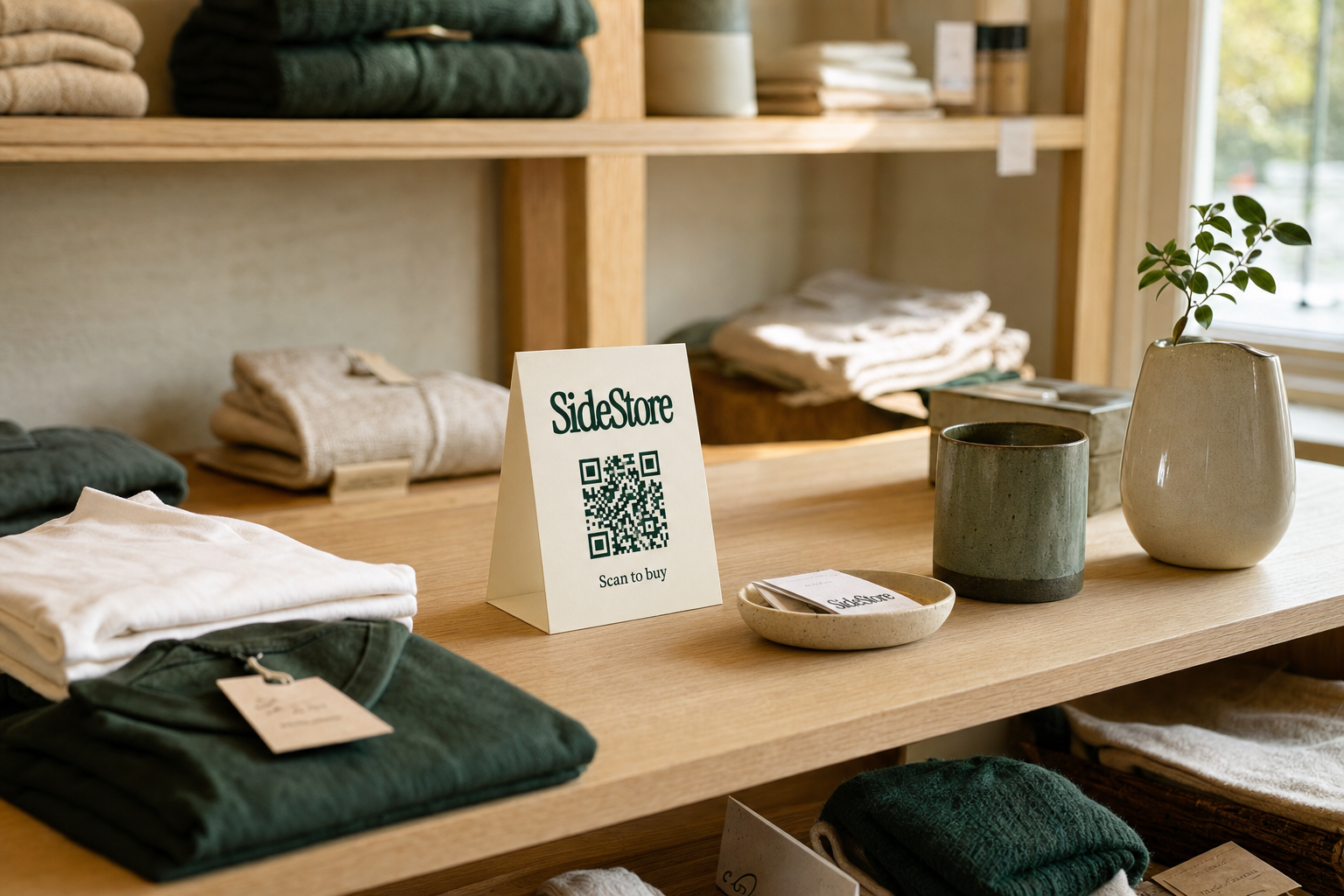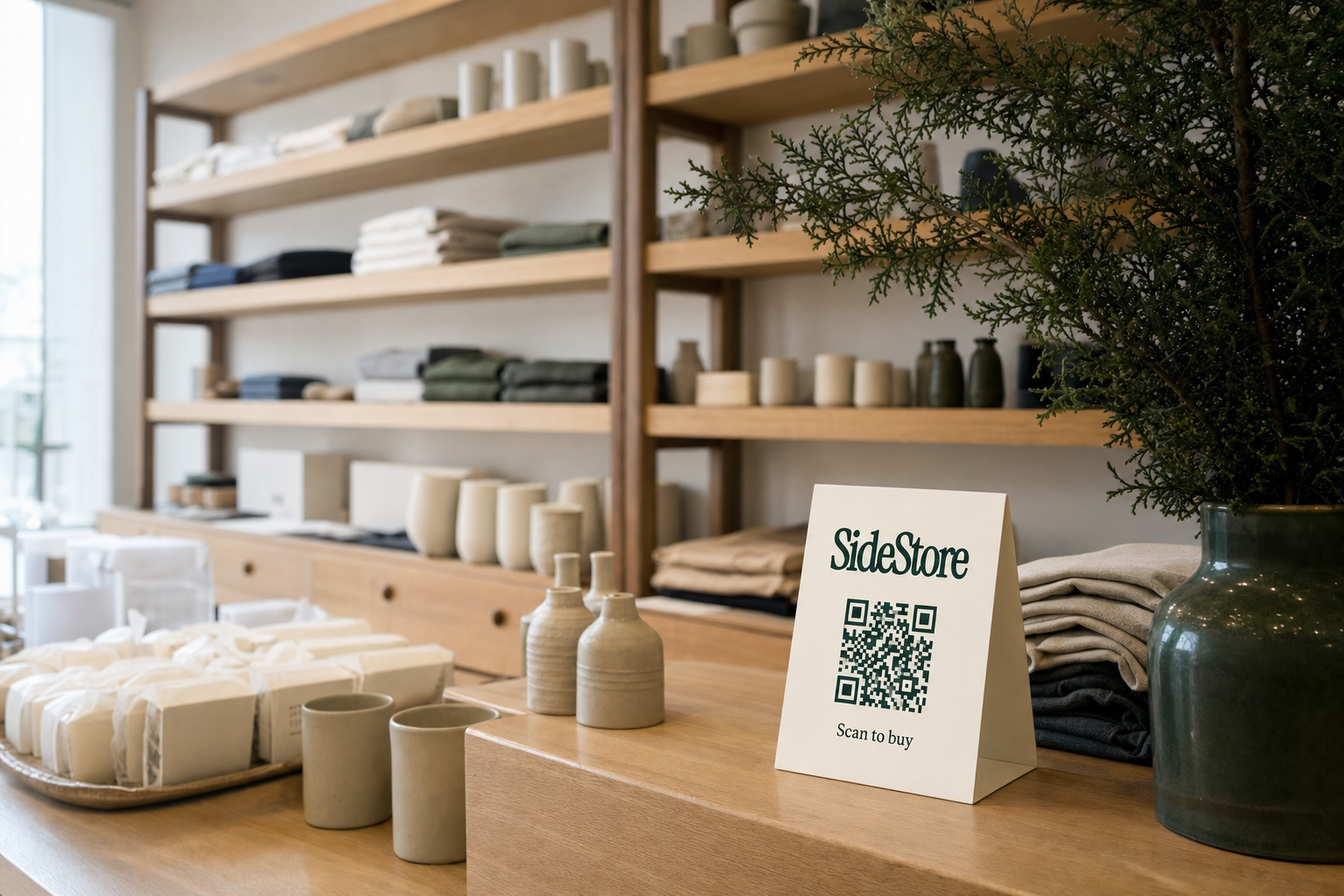
Boutique inventory is the physical stock you bought upfront and now own outright, and when it stalls, every unsold unit costs you shelf space, cash flow, and margin. If you need to move stock now, your fastest options are a storewide flash sale, direct outreach to liquidators, or listing on resale platforms like eBay or Poshmark. None recover your full cost. But they move stock, free up cash, and clear shelves you can put back to work.
After you've dealt with the backlog comes the harder question: why did you end up holding stock you can't sell, and how do you stop it happening again? One answer a growing number of boutique owners are turning to is making money from unused shelf space through consignment, placing maker-supplied products on your shelves without buying them upfront. You carry no inventory risk. You earn a split on every sale. You never guess wrong.
The sections below cover both: clearing what you already hold, and adding local products without buying inventory as a structural replacement.
Why Boutique Inventory Piles Up
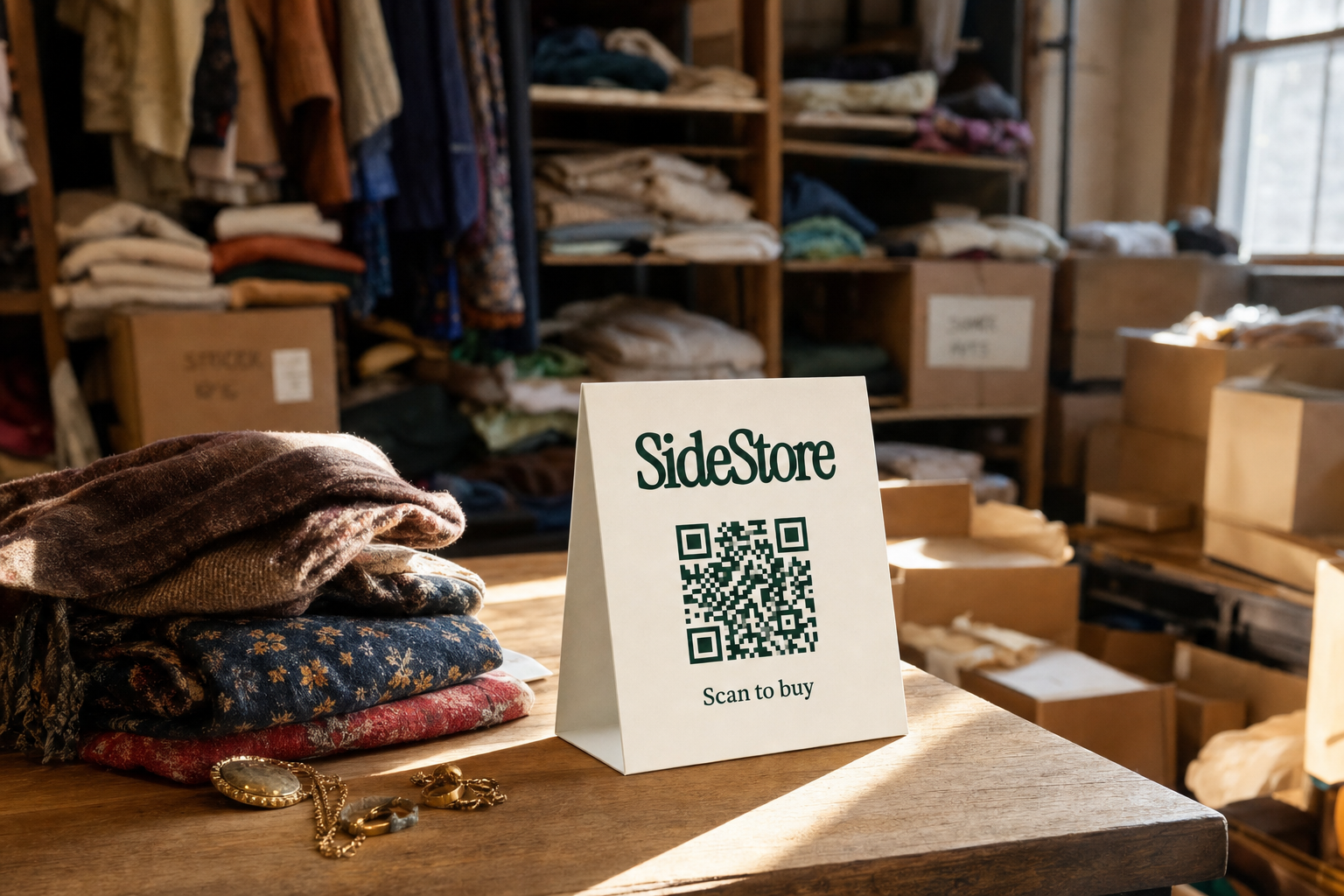
Boutique inventory stalls for reasons that repeat across almost every shop owner's experience. Buying decisions made months before the season lands. Trend shifts that happen faster than reorder cycles. Minimum order quantities that force you to buy twelve units when you can only sell four.
The causes cluster into five patterns:
Trend misjudgement. A product looked strong in a trade catalogue six months before the season. By the time it hit your floor, the moment had passed.
Minimum order quantities. Wholesale suppliers rarely let you buy one or two of anything. You order twelve, sell four, and sit with eight on a shelf.
Over-assortment. Stocking twenty SKUs when your traffic can only support ten spreads attention too thin. Everything moves slowly rather than a focused selection moving fast.
Seasonal dead zones. A product that sells in December can stall completely by February. If you don't have a clearance plan, it carries over to next season and compounds.
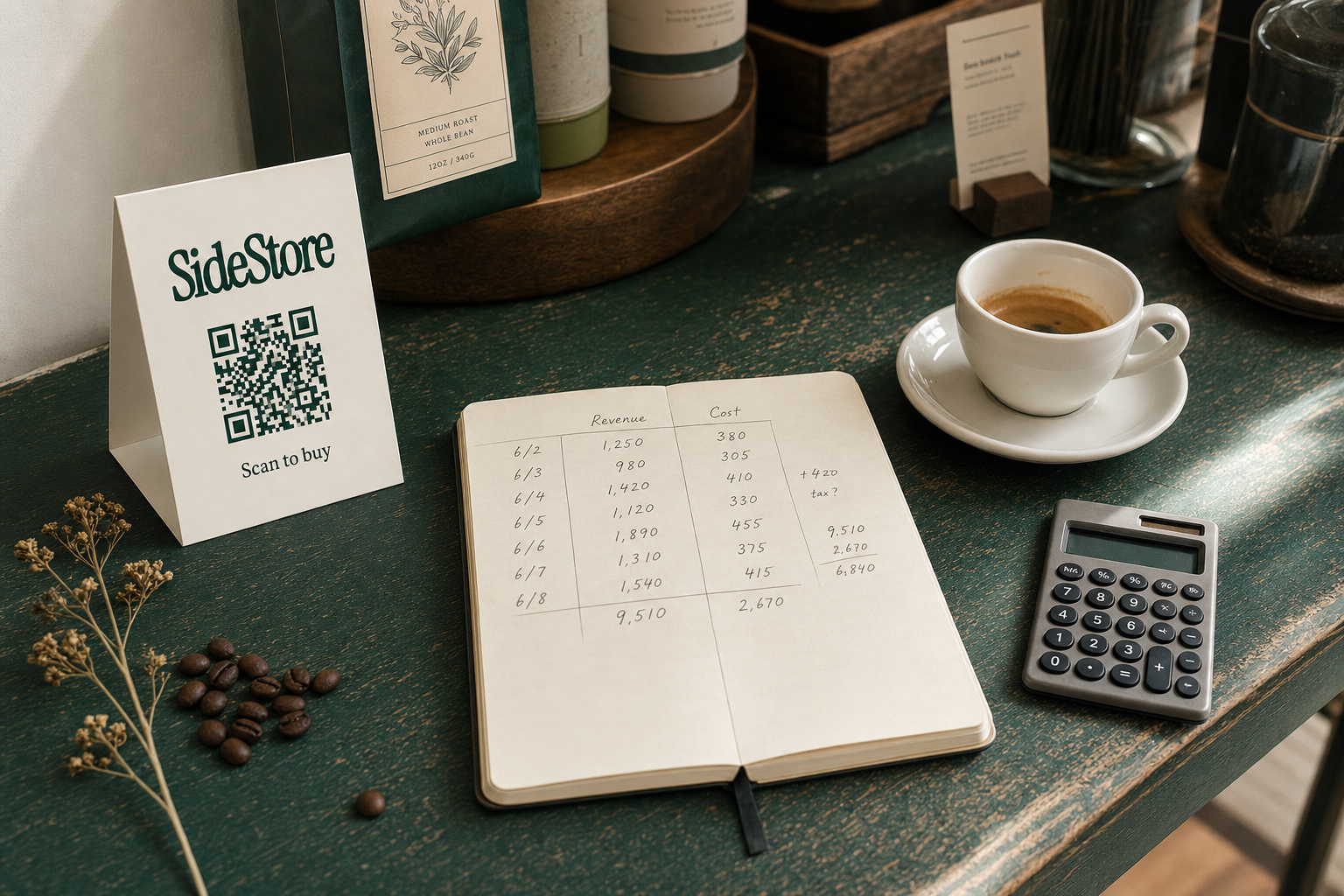
Cash flow optimism. Boutique owners often buy for hoped-for revenue, not proven revenue. Budget for 200 transactions a month, average 140, and you'll overstock on every buying cycle.
Sharing retail space with other merchants or makers dilutes the risk: you fill more of the floor without taking on more stock. But first, understand which of these patterns is driving your current overhang, because the right clearance tactic depends on it.
Immediate Clearance Tactics: Move the Stock You Hold
Your fastest options depend on how much you need to recover, how quickly you need cash, and how much time you can spend. Here are the five main routes, ordered roughly from highest recovery to lowest.
1. Storewide Flash Sale or Tiered Discount Event
Run a time-limited promotion, 48 to 72 hours works well, with clear discount tiers. Thirty percent off slow-movers, fifty percent off anything older than one season. Flash sales work because urgency drives foot traffic and reduces deliberation. Recovery rate: illustratively 50, 70% of retail, depending on discount depth. Speed: immediate. Effort: moderate. You need signage, social promotion, and staff time.
2. Bundle and Cross-Sell
Pair slow-moving SKUs with your bestsellers at a combined price that feels like a deal. A candle that won't move alone might sell readily alongside a popular ceramic piece. Recovery rate: illustratively 60, 80% of combined retail value. Speed: gradual, over two to four weeks. Effort: low. No new platforms or logistics involved.
3. Online Resale Channels
List items on eBay, Poshmark, Facebook Marketplace, or Etsy. You reach buyers outside your local area. The trade-off: each listing takes time to photograph and describe, and you'll pay platform fees. Recovery rate: illustratively 40, 70% of retail for desirable items, lower for generic stock. Speed: one to three weeks per item. Effort: high per unit. Check the boutique inventory for sale guide for specifics on presenting lots effectively.
4. Bulk Liquidation and Wholesale Buyers
Contact a liquidator or off-price wholesaler who will buy your entire overstock in one transaction. You clear the floor in days, but recovery is low. Illustratively, 10, 30% of retail is typical for mixed boutique lots. Speed: very fast, often within a week. Effort: low once a buyer is found. Best used when cash flow is the priority and you cannot spend time on individual sales.
5. Pop-Up or Off-Site Sale Event
Rent a table at a local market, partner with another retailer for a joint clearance weekend, or host a private sale for your existing customer list. Recovery rate: illustratively 50, 65% of retail if the audience is warm. Speed: one weekend. Effort: moderate. Setup, transport, and staffing required.
6. Donate for a Tax Write-Off
Donate unsold stock to a registered charity. You recover nothing in cash, but the donation may be deductible as a business expense. This is best for stock with very low resale value where the time cost of selling outweighs the return. Confirm the treatment with your accountant; rules vary by jurisdiction.
For most boutiques, the answer is a sequenced combination: run a flash sale first, move residual stock to resale channels, and liquidate the remainder.
Clearance Options at a Glance
Comparing clearance methods side by side makes it easier to choose. The table below summarises the five main options by recovery rate, time to clear, and effort. All figures are illustrative ranges, not guarantees.
| Option | Typical Recovery Rate (illustrative) | Time to Clear | Effort Level |
|---|---|---|---|
| Flash sale / tiered discount | 50, 70% of retail | 2, 3 days | Moderate |
| Bundle and cross-sell | 60, 80% of combined retail | 2, 4 weeks | Low |
| Online resale (eBay, Poshmark, etc.) | 40, 70% per item | 1, 3 weeks | High |
| Bulk liquidation | 10, 30% of retail | Under 1 week | Low |
| Donation (tax write-off) | 0% cash recovery | Immediate | Low |
The pattern is straightforward: the faster you need to clear and the less effort you can spend, the more recovery you give up. Liquidation is the floor on recovery and the ceiling on speed. Flash sales sit in the middle. Use the table to match the tactic to your specific constraint, cash urgency or time availability, not to a vague preference.
The Structural Fix: Replace Bought-In Stock With Consignment
The alternative to buying inventory is consignment. A maker places their products on your shelves, you display and sell them, and both of you get paid only when a sale happens. You carry no upfront cost, no stock risk, and no dead inventory.
Consignment itself is not new, it has existed in galleries, antique shops, and craft stores for decades. What has changed is the tooling. Platforms like SideStore bring consignment commerce into any retail space with the infrastructure to manage it properly: checkout, stock tracking, and automatic split payouts, all handled without manual reconciliation at the end of the month.
The margin trade-off is real and worth naming. On bought-in wholesale stock, your gross margin, illustratively 50, 60% at retail, is yours entirely once the product sells. On consignment, you split that revenue with the maker. A typical split might be 60% to the maker and 40% to you as the host, though terms vary. Your take is lower per unit. But your risk is zero. You never bought the stock, so you cannot be left holding it.
For a boutique that has lived through one or two seasons of dead inventory, that trade-off often looks very different on reflection.
How SideStore's Retail Widget handles the mechanics. When a maker places products in your boutique through SideStore, the Retail Widget manages the placement end to end. It handles checkout, including a scan-to-pay QR that a maker can attach directly to their product, or that you can display as a single card for the whole placement. It tracks live stock levels so you always know what is on the shelf. It attributes sales to the correct placement. And it processes automatic split payouts to the maker and to you, with no manual accounting required.
Read more about selling on consignment, how the SideStore QR card works, and how consignment splits work to understand the full mechanics before approaching a maker.
The structural point is this: consignment converts a portion of your floor from a capital-intensive, risk-bearing proposition into a passive revenue stream. You earn from space you already have. You stop needing to guess what will sell six months from now.
How to Set Up a Consignment Placement in Your Boutique
Setting up a consignment placement is more straightforward than most boutique owners expect. The steps below assume you are using SideStore's Retail Widget to manage the placement, but the sequence applies to any structured consignment arrangement.
Identify your available shelf space. Measure the area you can dedicate to consignment stock. Even a single shelf or a corner display is enough to start. The goal is not to overhaul your floor plan; it is to activate space that would otherwise sit idle or hold slow stock.
Find a maker whose work fits your customer. Reach out to local makers looking for consignment placements, or list your space on SideStore so makers can find you. Look for products that complement your existing range rather than compete with it.
Agree the consignment split and terms. Decide the revenue split, a common starting point is 60/40 in the maker's favour, how long the placement runs, and what happens to unsold stock at the end of the term. Put it in writing. A simple one-page agreement avoids disputes.
Set up the Retail Widget for the placement. The maker or you configures the placement in SideStore. Stock levels go live. The Retail Widget generates the scan-to-pay QR: the maker can attach it directly to each product, or you can display a single card for the entire placement.
Go live and monitor stock. Once the placement is active, the Retail Widget tracks every sale, updates stock in real time, and routes the correct split to each party automatically. Your job is to keep the display tidy and restock with the maker when levels drop.
For a fuller picture of the model, read how boutique shops can add local products without buying inventory. Most placements go live within a day or two of agreeing terms.
What to Put on Consignment in a Boutique
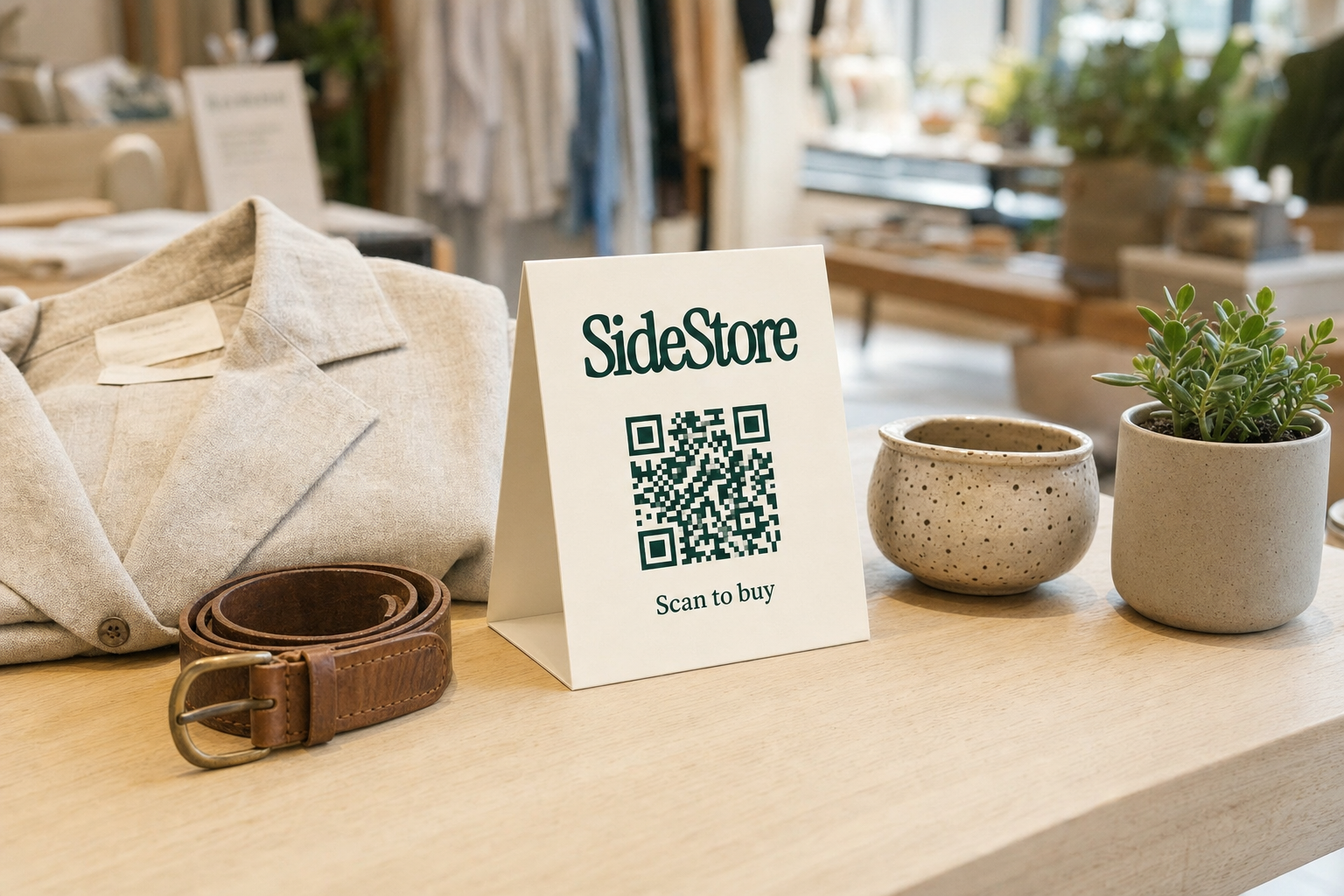
Products that work on consignment in a boutique share three characteristics: they are physical, giftable, and made in limited runs rather than mass-produced. The sweet spot is anything a customer would pick up, examine, and buy as a gift or self-purchase, without needing a fitting room or a specialist explanation.
Concrete categories that perform well: hand-thrown ceramics, small-batch candles and home fragrance, illustrated prints and cards, locally made jewellery, textile accessories like scarves and pouches, artisan food products, and handmade skincare.
Read the full guide on selling handmade products in physical stores on consignment for category-specific detail.
For makers looking for boutique placements, the boutique channel is one of the most accessible entry points into physical retail without holding a stall.
Before accepting a product on consignment, apply this three-question filter:
1. Does a customer understand what it is in under five seconds? Products that require a detailed explanation are harder to sell without a sales assistant present.
2. Is the price point appropriate for your customer's average transaction? A product priced at ten times your typical basket size will sit, regardless of its quality.
3. Does it complement rather than duplicate what you already carry? Consignment stock should expand your offer, not create internal competition.
If the answer to all three is yes, the product earns a trial placement.
Preventing Inventory Buildup Going Forward
The way to stop boutique inventory from piling up again is to reduce the amount of stock you own outright. Four habits make that practical.
Buy smaller and reorder faster. Resist minimum order pressure. A smaller first order at a higher unit cost is cheaper than a large order half of which stalls. Reorder proven sellers quickly rather than betting on new ones.
Review velocity weekly, not seasonally. Check which SKUs are moving and which are not at least once a week. Slow-movers identified at week three can still be bundled or promoted; slow-movers identified at week twelve become a clearance problem.
Set a hard clearance trigger. Decide in advance: any unit unsold after a fixed number of weeks gets discounted immediately, without debate. A pre-committed rule removes the cognitive friction that lets dead stock accumulate.
Use consignment to fill your floor without buying stock. Consignment is not a workaround for a bad season. It is a structural tool for monetising idle shelf space without capital risk. The more of your floor that is supplied on consignment, the less exposure you have to buying decisions that go wrong.
Frequently Asked Questions
Boutique owners most commonly ask four questions when they are dealing with excess stock: how to move it fast, whether donation has a tax benefit, how consignment differs from wholesale, and where to find makers.
What is the fastest way to get rid of boutique inventory?
The fastest single method is bulk liquidation: contact a liquidator or off-price wholesaler, agree a price per unit or per lot, and clear the floor within days. Recovery is low, illustratively 10, 30% of retail, but the speed is unmatched. If you have slightly more time, a 48-hour flash sale recovers more and keeps the revenue in-house.
Can I donate boutique inventory for a tax deduction?
Yes, in most jurisdictions you can deduct the fair market value or cost of donated goods as a business expense when donating to a registered charity. The exact treatment depends on your location and business structure, so confirm the rules with your accountant before donating. Donation works best for low-value stock where the time cost of selling outweighs the cash recovery.
What is the difference between consignment and buying wholesale?
With wholesale, you buy stock upfront at a discounted price and own it until it sells, all the risk is yours. With consignment, the maker retains ownership until a sale happens and you earn a percentage of each transaction. Your margin per unit is lower on consignment, but you carry no inventory risk and no dead stock.
How do I find makers to put on consignment in my boutique?
List your available shelf space on SideStore so makers searching for placements can find you, or browse local markets, craft fairs, and maker directories. You can also read the guide to running a boutique without holding inventory for sourcing strategies. Look for makers whose aesthetic and price point match your existing customer base before approaching anyone.
Clear the Backlog. Change the Model.
If you need to get rid of boutique inventory now, start with a flash sale, move residual stock to resale channels, and liquidate the rest. That handles the immediate problem. Then identify the shelf space you freed up, find a maker whose work fits your customer, and place it on consignment.
See how other retail spaces activate idle shelves, how cafes run consignment alongside their core offer, and how bed and breakfasts use consignment in small spaces. Then go live.
Build a consignment network without opening a store of your own.