Boutique inventory is the curated selection of physical products you stock, source, and sell in your retail space. Whether you're looking to bring in new inventory or move excess stock you already hold, the model you choose determines your cash exposure, your risk, and how much admin ends up on your plate.
The four main sourcing models are wholesale buying, direct purchasing from makers, dropshipping, and consignment. Of these, consignment is the only model where you stock your shelves with zero upfront spend. The maker retains ownership until a sale occurs. You earn a percentage of each sale automatically, and you carry no unsold stock risk.
If you want to add local products without buying inventory, consignment is the direct path. Understanding what selling on consignment means in practice, and how the mechanics work for your space, is where to start.
What Counts as Boutique Inventory
Boutique inventory is any physical product you hold, display, and make available for customer purchase, whether you own it outright or a maker has placed it on consignment. The term covers both sides of the market: shops looking to source new stock and shops looking to sell off existing stock they no longer need.
On the sourcing side, boutique inventory typically spans:
- Apparel and accessories: clothing, bags, scarves, jewellery, belts
- Home goods and lifestyle products: candles, ceramics, small textiles, prints
- Beauty and wellness: skincare, soaps, botanical products
- Food and specialty goods: artisan preserves, teas, small-batch confections
- Stationery and paper goods: greeting cards, notebooks, art prints
On the offloading side, "boutique inventory for sale" describes stock you want to liquidate, whether because of seasonal shifts, overstocking, or a change in product direction. This is a secondary market with its own channels, covered later in this article.
Either way, the product mix you carry defines your boutique's identity. High-margin, low-footprint items are particularly attractive, especially if you're evaluating whether to make money from unused shelf space by hosting maker products rather than buying all your own stock outright. The key question for any boutique owner is not just what to sell, but how to source it. That choice determines your financial risk from day one.
How Boutiques Source Inventory: The Main Models
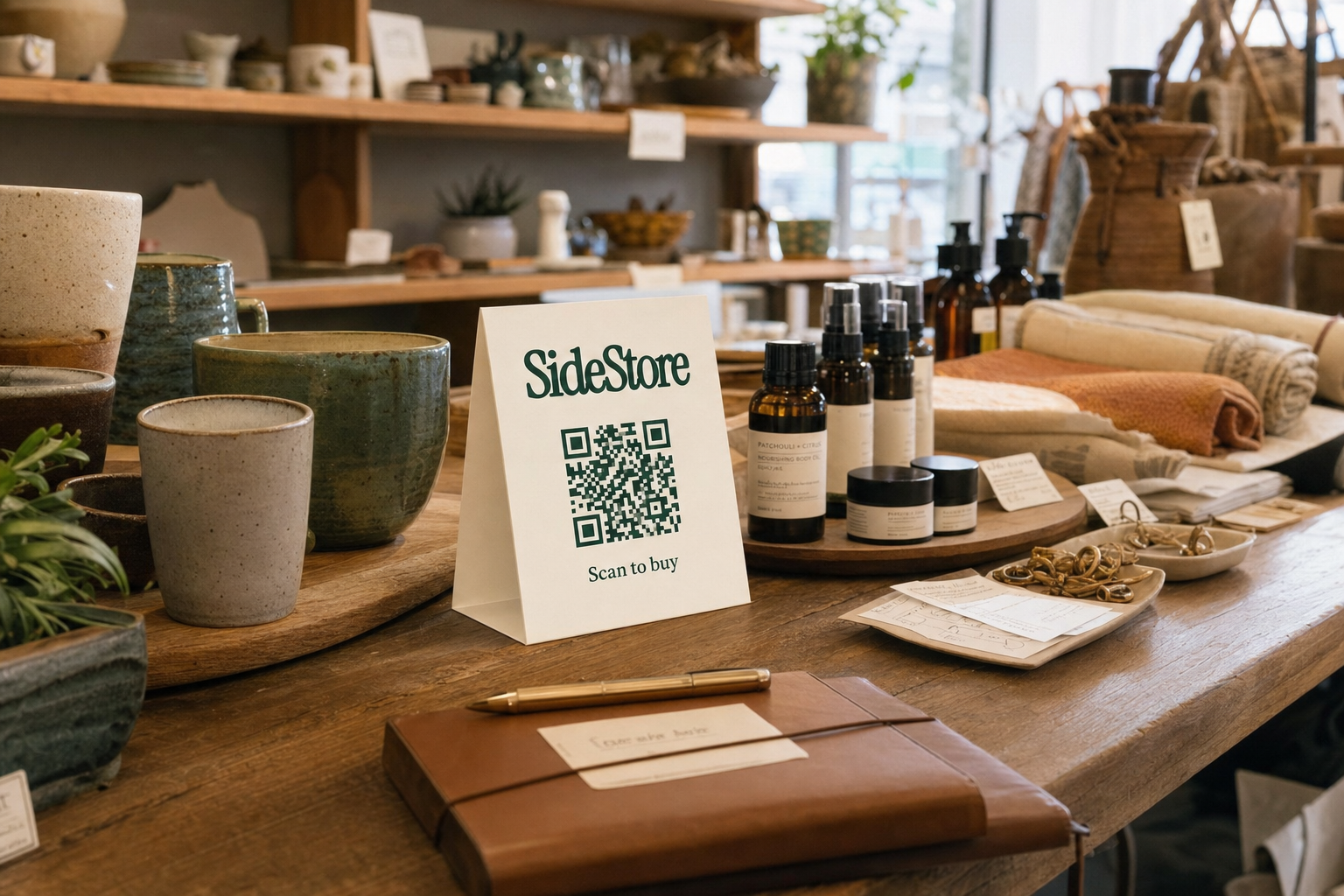
You have four main ways to bring products onto your shelves: wholesale purchasing, direct buying from makers, dropshipping, and consignment. Each model has a distinct cash requirement and risk profile. Choosing the wrong one for your volume and cash flow can create a costly overstocking problem before your first busy season.
Wholesale purchasing means buying products in bulk from a distributor or brand at a discounted unit price, then marking them up for retail. Your cash is committed the moment the invoice is issued. If the products don't sell, the financial loss is entirely yours.
Direct purchase from makers follows the same logic as wholesale but operates at smaller volumes and often without a formal trade programme. You pay for the goods upfront and own them. Stock risk sits entirely with you.
Dropshipping means listing products you don't physically stock. A supplier ships directly to the customer when a sale occurs. Cash exposure is low because you pay per order, but you give up control over fulfilment speed, packaging, and product quality. It also removes the tactile, curated character that defines a boutique.
Consignment means a maker places their products in your space and retains ownership until a sale occurs. You pay nothing upfront. When a product sells, the revenue splits between you and the maker according to agreed terms. If the product doesn't sell, it goes back. No cash exposure, no unsold stock sitting on a markdown rack.
What consignment means in practice is that the inventory risk stays with the person who made the product, while you provide the shelf space and the customer relationship. For boutiques with limited capital or limited storage, this distinction matters enormously. Understanding the full picture of selling to consignment helps you set terms that work for both sides.
Boutique Inventory Sourcing Models: A Direct Comparison
Which sourcing model fits your boutique depends on your available capital, your tolerance for unsold stock, and how much time you want to spend managing supplier relationships. The table below gives you a direct comparison across four practical criteria.
| Model | Upfront Cost | Stock Risk | Admin Burden | Best For |
|---|---|---|---|---|
| Wholesale | High (bulk order required) | High (you own unsold stock) | Medium (reorder management, returns) | Established boutiques with predictable sell-through |
| Direct from maker | Medium (per-unit purchase) | High (you own unsold stock) | Medium (individual supplier relationships) | Boutiques building a curated local brand |
| Dropshipping | None (pay per order) | None (supplier holds stock) | High (fulfilment disputes, quality control) | Online-first or hybrid retailers, not pure boutiques |
| Consignment | None (maker retains ownership) | None (maker takes back unsold stock) | Low (automated with SideStore Retail Widget) | Boutiques with idle shelf space and limited capital |
Consignment's standout advantage is the combination of zero upfront cost and zero unsold stock risk. You earn from space you already have, without committing capital to products that may not move. When you use SideStore's Retail Widget to manage consignment placements, checkout, stock tracking, and split payouts are handled automatically. That's what keeps the admin burden low. If you're weighing whether to start adding local products without buying inventory, consignment is the model that makes that possible at any scale.
Using Consignment as Your Boutique Inventory Strategy
Consignment works as a boutique inventory strategy because it separates the cost of goods from the act of selling them. You display a maker's products, take a share when they sell, and return what doesn't move. No purchase order, no markdown exposure, no write-offs at the end of the season.
Here's how the mechanics work in practice with SideStore:
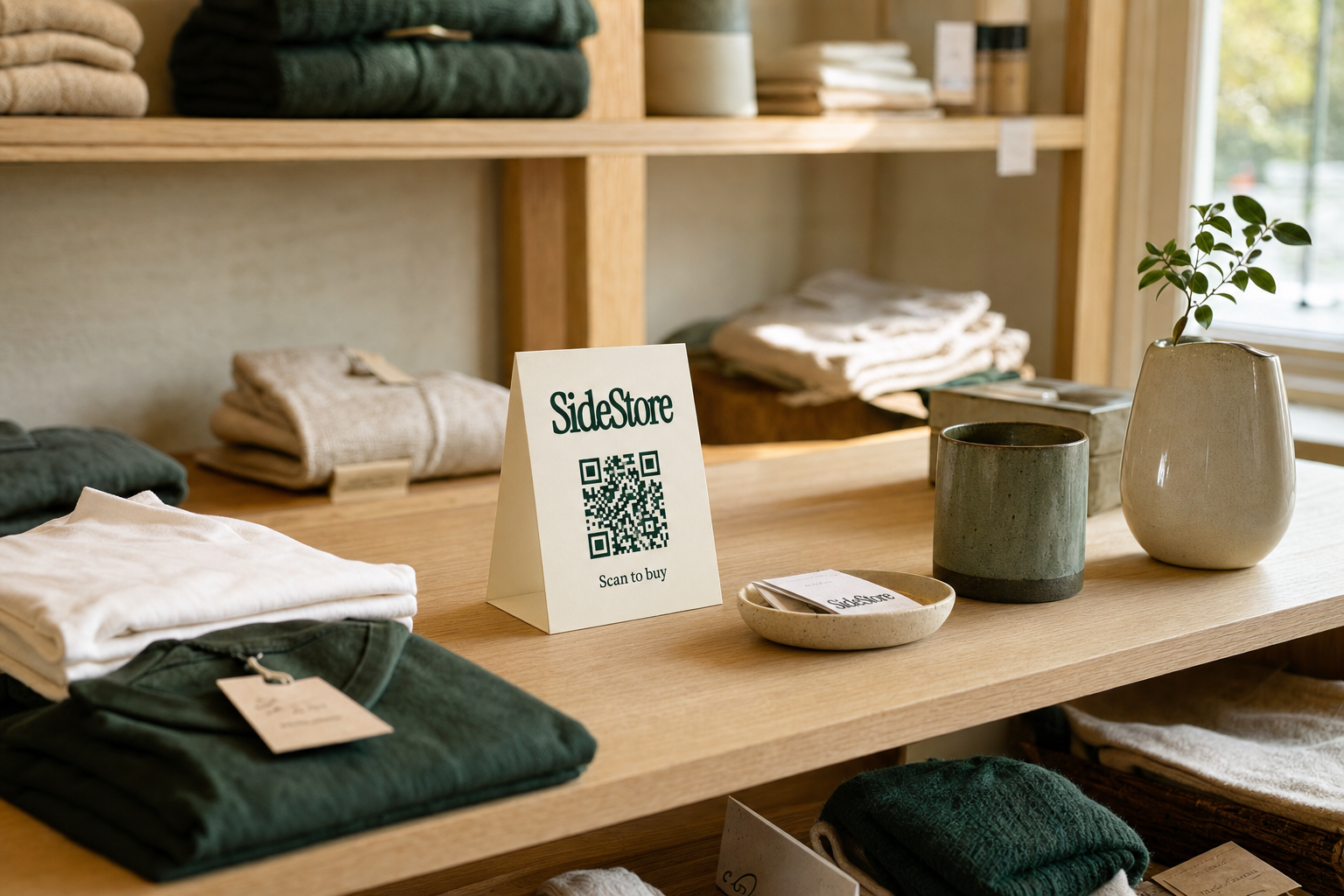
The maker sets up the placement. They use the Retail Widget to configure their product: set the retail price, define the consignment split, and generate a printable QR card. The Retail Widget is the full consignment-management interface, handling placement setup, checkout, live stock tracking, placement attribution, and automatic split settlement. The QR checkout is one function within that interface, not the whole product.
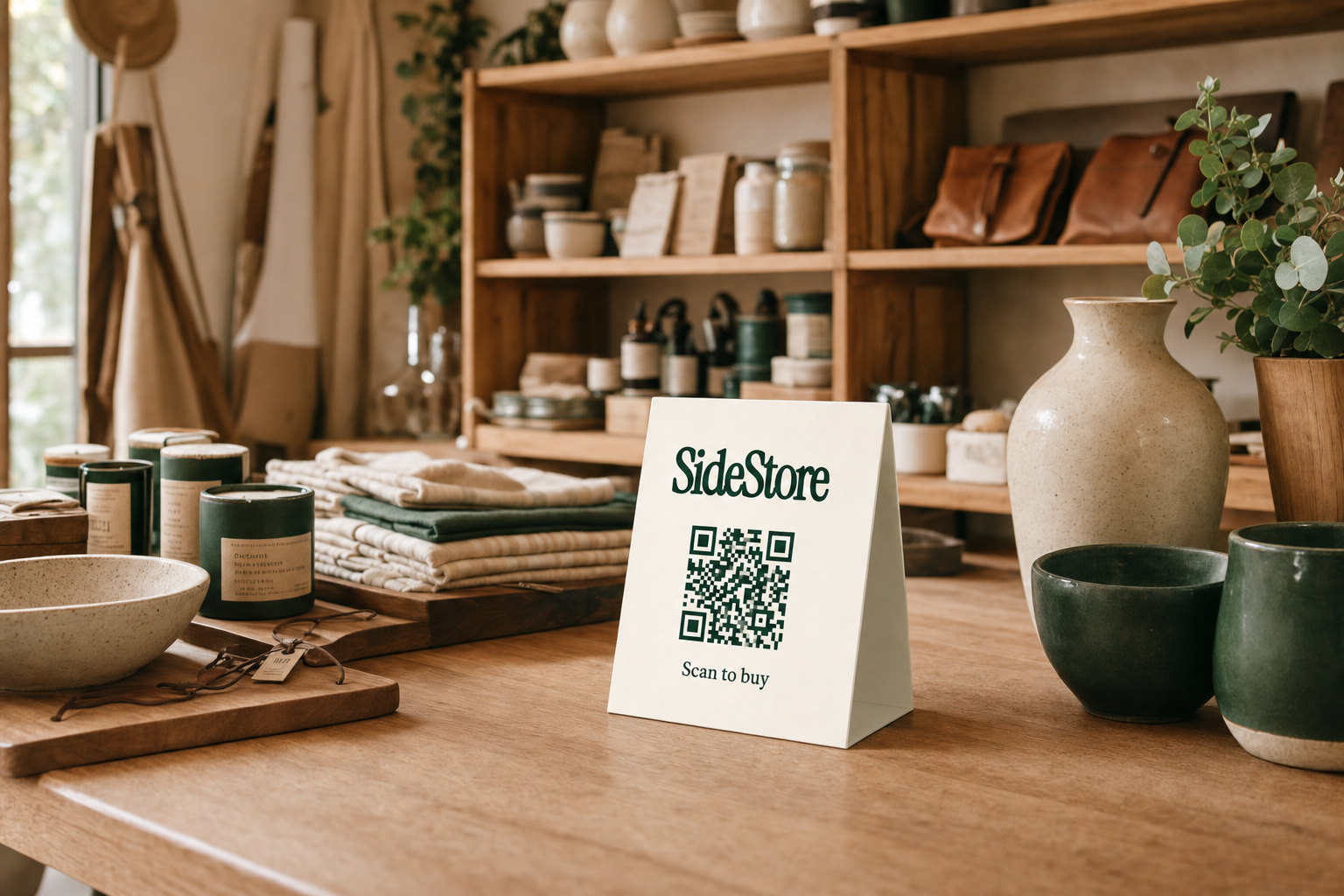
You agree to host. You and the maker agree on terms, the maker delivers stock, and the QR card is displayed either on individual products or as a single card covering all products in the placement. Customers scan to purchase directly.
The sale settles automatically. When a scan-to-pay transaction completes, the Retail Widget records it, updates live stock levels, and routes the maker's share and your host share to each party without manual reconciliation.
Stock levels stay accurate. Because the Retail Widget tracks every sale against the placement in real time, you always know how many units remain. You can request a restock from the maker before a gap appears on your shelf.
Unsold stock returns to the maker. At the end of a placement period, products that didn't sell go back. You carry no loss.
To see how other boutiques approach this, read about how to sell handmade products in your store on consignment, and for detail on the checkout side, how the SideStore QR card works explains the scan-to-pay flow precisely.
What Types of Inventory Sell Well in Boutiques
The best-performing boutique inventory tends to be tactile, distinctive, and priced at an impulse-to-considered purchase range. These are products customers want to pick up, examine, and own immediately rather than research at length. This is why physical boutiques consistently outperform online listings for certain product categories.
Product types that perform reliably in boutique environments:
- Jewellery and small accessories: high margin relative to footprint, strong impulse purchase behaviour
- Candles and home fragrance: sensory experience drives in-store sales that online cannot replicate
- Ceramics and handmade homewares: uniqueness and craft justify price premium
- Skincare and beauty products: trust is built by touching, smelling, and reading ingredients in person
- Art prints and greeting cards: low unit price, high volume, negligible shelf space per unit
- Specialty food items: short shelf life requires regular restocking but drives repeat visits
For boutiques evaluating consignment offers from makers, the per-square-centimetre efficiency of a product matters as a practical decision criterion. A small jewellery display or a greeting card rack generating consistent revenue from 30 cm of shelf space is far more valuable than a slow-moving garment taking up a full rail.
Local makers looking for retail placement are a ready supply of exactly these product types, and many of them work on consignment terms by default. Understanding how local makers sell without opening a store helps you see the deal from their side, which makes terms negotiations faster and more straightforward.
Managing Boutique Inventory: What You Actually Need to Track
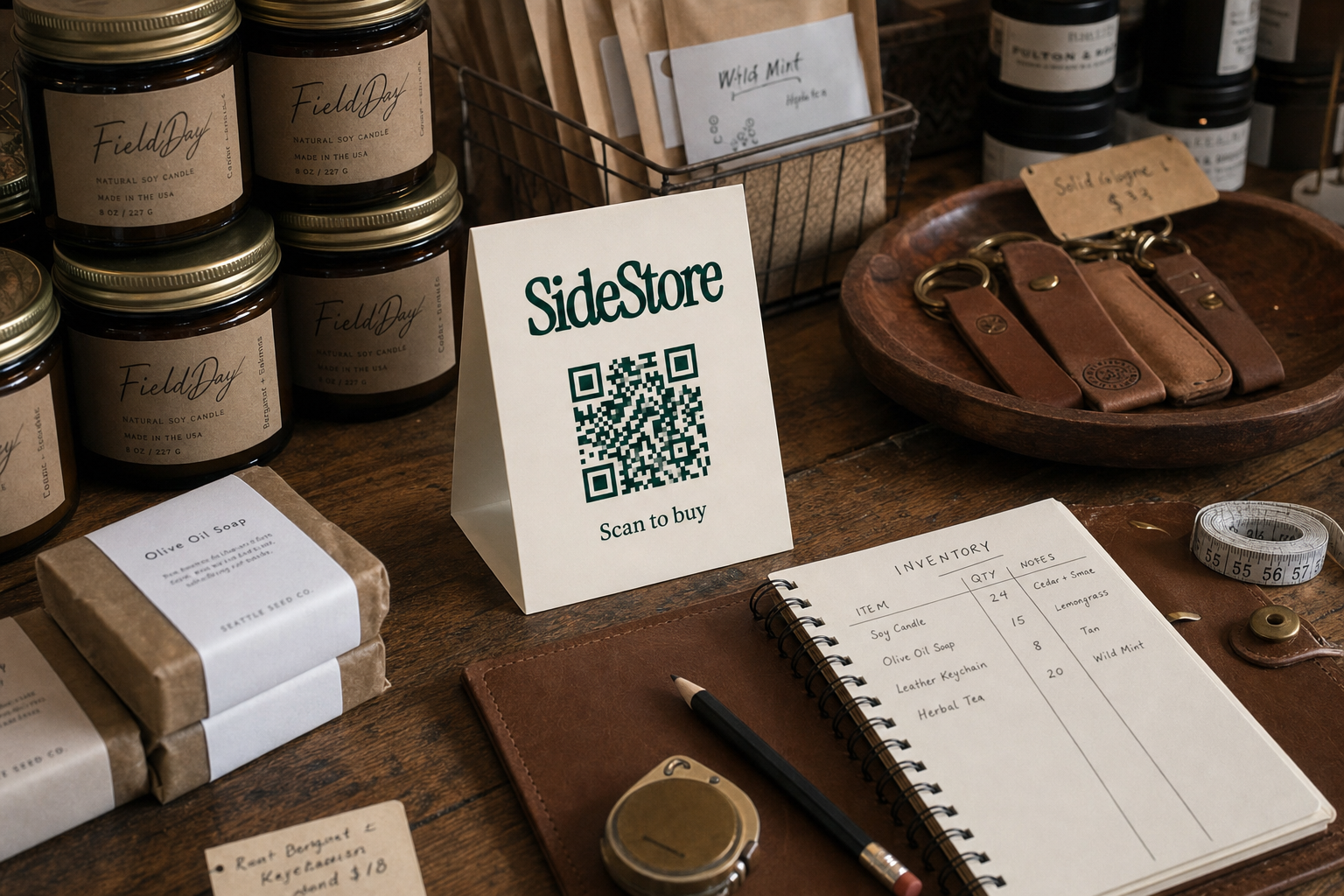
Boutique inventory management comes down to four core tasks: knowing what you have on the shelf, knowing what has sold, reconciling payouts with stock movement, and knowing when to restock. The degree to which these tasks are manual or automated depends entirely on the inventory model you use.
Stock levels. You need to know, at any given moment, how many units of each product are available. With owned inventory, this is typically handled by a point-of-sale system or a spreadsheet. With consignment inventory managed through the SideStore Retail Widget, live stock tracking is built into the placement. Each scan-to-pay sale updates the count automatically.
Sales recording. Every transaction needs to be logged against the right product and the right placement. This is where manual consignment arrangements fall apart: handwritten logs and periodic reconciliation meetings are time-consuming and error-prone. The Retail Widget records every transaction at the point of sale and attributes it to the correct placement.
Payout reconciliation. With wholesale stock, payout is the purchase invoice, already settled. With consignment, you owe the maker their share of each sale. The Retail Widget handles automatic split settlement, so neither you nor the maker needs to calculate and transfer manually.
Restock management. You still need to contact makers when stock runs low. The Retail Widget tells you exactly when to make that call, but the actual conversation and delivery logistics remain your responsibility.
Sharing retail space with local makers covers the relationship side of these arrangements. For a broader look at the financial case, how to monetize idle shelf space explains the revenue mechanics in more detail.
If You Have Excess Boutique Inventory to Sell
If your situation is the reverse, and you have existing boutique inventory you need to move, you have three practical routes available.
Markdown and clear in-store. The most straightforward option. Discount the product, increase its visibility, and clear it through your existing customer base. The cost is margin compression. The benefit is speed and simplicity, with no new relationships or logistics required.
Sell through a secondary marketplace. Online platforms that specialise in wholesale or overstock merchandise allow boutiques to sell excess inventory in bulk to other retailers. This moves volume quickly but typically at a significant discount to your original cost.
Place on consignment elsewhere. If your products still have retail value, approach another retailer to take them on consignment rather than selling them at a loss. This preserves more of the margin and keeps the products in front of new customers. Understanding how to sell on consignment from the seller's side applies directly here: you become the maker in the transaction, placing products in another space and splitting the proceeds on each sale.
The right option depends on how urgently you need to recover cash and how much margin loss you can absorb. Excess inventory sitting on a shelf has a carrying cost, even if it's not always visible in a simple cost calculation.
How to Add Consignment Inventory to Your Boutique
Adding consignment inventory to your boutique is straightforward, and the maker handles more of the setup than you might expect. Here's how it works from your side.
Step 1: Identify the space you have available. A single shelf section, a display table, a corner, or a rack near the register all qualify. You don't need to redesign your layout. You need a defined area you can assign to a maker's placement.
Step 2: Connect with makers who work on consignment terms. Local craft markets, maker networks, and platforms like SideStore connect boutiques with makers actively seeking retail placement. You can also approach makers whose work aligns with your store's aesthetic directly.
Step 3: Agree on terms. Set the consignment split, the minimum placement period, and the restock process. Write these terms down, even informally.
Step 4: The maker sets up the Retail Widget. This is the maker's responsibility. They configure the product, set the price and split, and generate the QR card for the placement. You don't need to manage this step.
Step 5: Display the products and the QR card. Place the stock in your agreed area. The maker's QR card goes with it, either on individual products or as a single point-of-sale card for the whole placement.
Step 6: Sales happen and settle automatically. Customers scan and pay. The Retail Widget logs each sale, updates stock, and routes payouts. You check your balance and reorder when stock runs low.
The result is a stocked shelf that costs you nothing upfront and earns from every sale. See how other retail spaces running consignment placements handle this model in practice, and how cafes run the same model if you want a direct parallel to a small-footprint venue.
Boutique Inventory: The Decision That Shapes Your Cost Structure
The sourcing model you choose for boutique inventory determines your cash exposure, your risk, and your administrative load from day one. Buy wholesale and you commit capital before a single unit sells. Run consignment and you stock your shelves from makers, earn on every sale, and return what doesn't move.
Consignment isn't the right model for every product category or every boutique relationship, but for boutiques with available shelf space and an interest in local or independent makers, it removes the primary barrier: upfront cost.
The SideStore Retail Widget makes consignment practical at a boutique scale by handling checkout, live stock tracking, and automatic split settlement without requiring manual reconciliation on either side.
Your next step is straightforward. Identify one section of shelf space you're not currently using to its full potential, find one local maker whose work fits your store, and model a consignment arrangement. The mechanics take care of themselves once the placement is live.
Read more about adding local products without buying inventory, see how other venue types run the same model, or explore how bed and breakfasts earn from a small retail corner as a compact example of the same principle at work.