Sharing retail space means a maker places products in an existing venue and earns when they sell, no rent, no store. Here is how it works for both hosts and makers.
Sharing retail space is an arrangement where an independent maker places their products inside an existing venue, the host earns a percentage of each sale, and no money changes hands until a customer buys. That is the cleanest definition, and it is worth holding onto because most confusion in this space comes from conflating it with pop-up rental or wholesale, which work entirely differently.
If you run a cafe, boutique, hotel, or any space with foot traffic and free shelf room, consignment through SideStore is how you make money from unused shelf space without buying a single unit of stock. If you are a maker trying to reach customers beyond your own channels, it is how you get your products in front of real shoppers without opening a store. Understanding what consignment means is the foundation for both parties. The sections below cover how the arrangement works, which venues suit it best, how the money moves, and how to set it up.
How Sharing Retail Space Works
Here is the flow: the maker delivers stock to the venue, the venue displays it, a customer buys, and the sale revenue splits automatically between maker and host. No invoice, no monthly reconciliation, no chasing payments. The Retail Widget handles it.
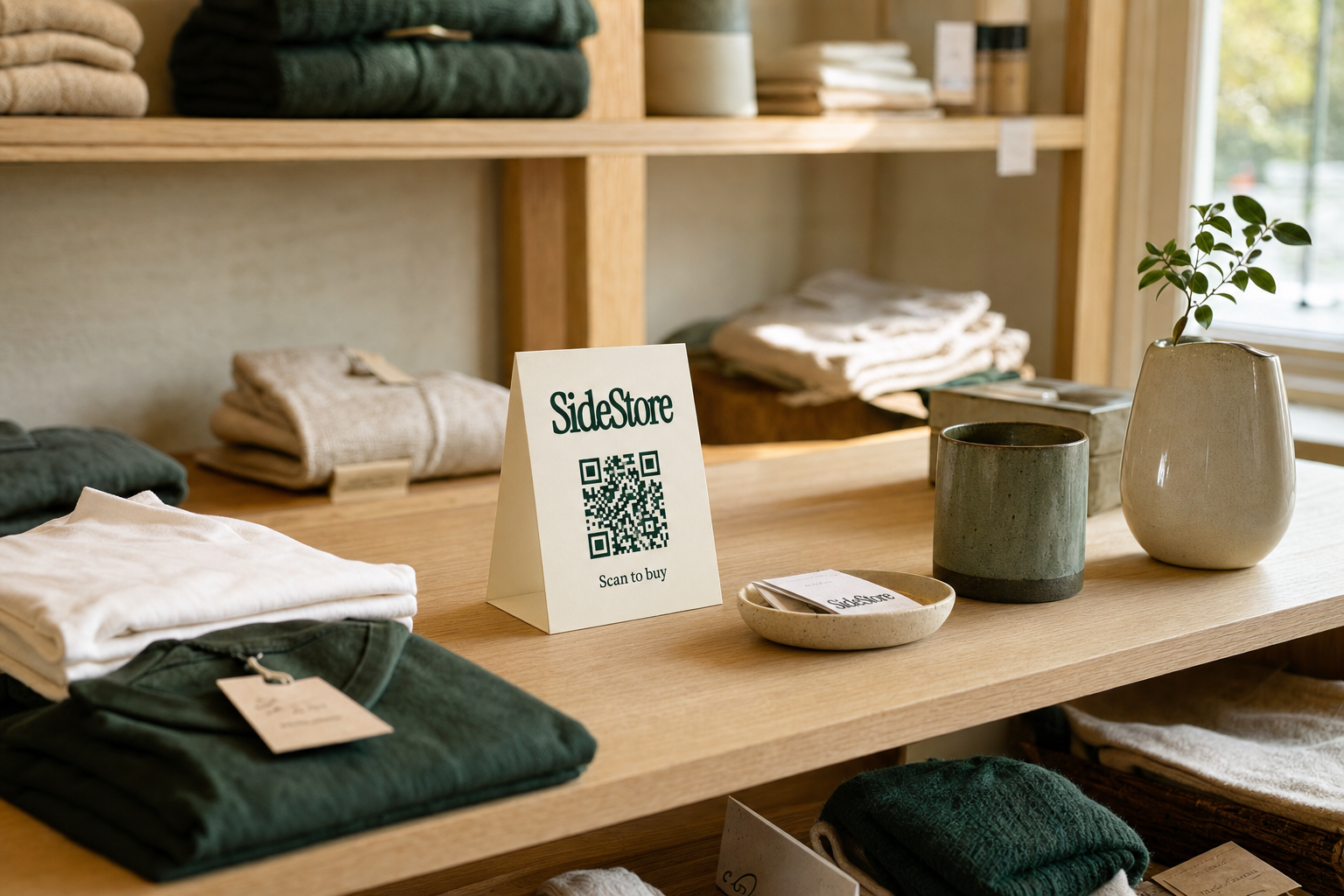
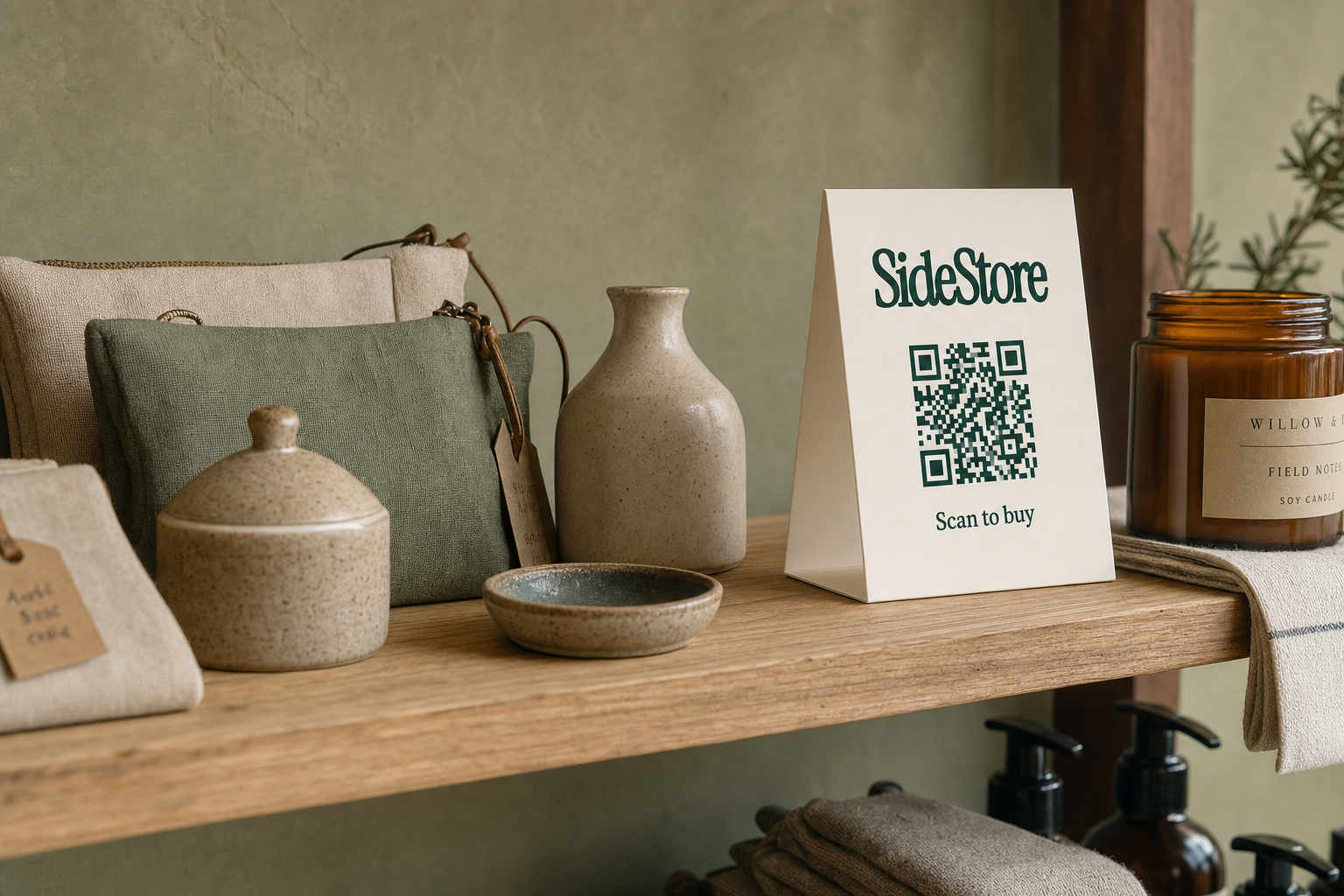
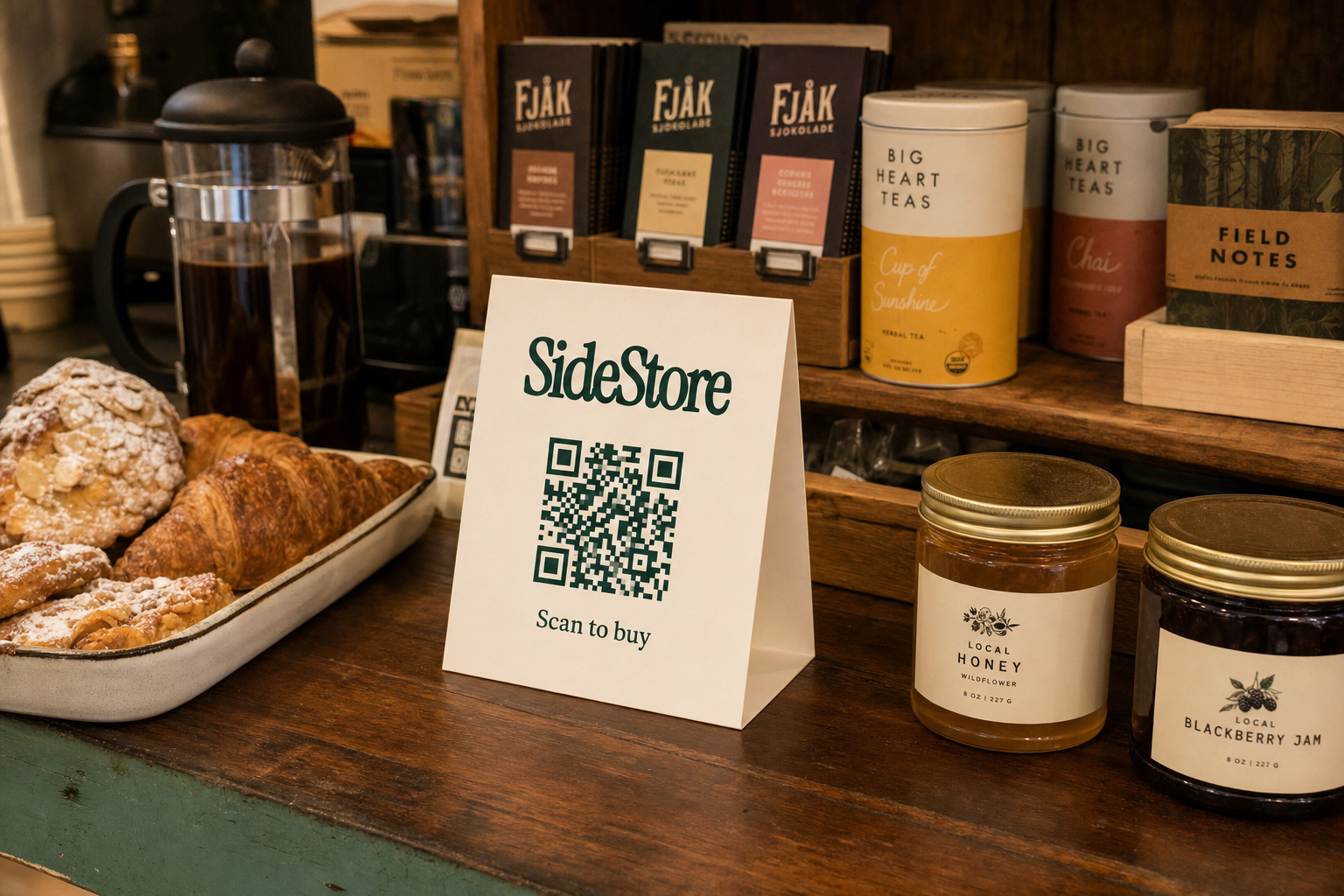
The Retail Widget is SideStore's consignment-management interface. It handles the full placement lifecycle: product listing, live stock tracking, placement attribution, automatic split payouts, and checkout. The scan-to-pay QR card is one function within the Retail Widget, not the whole product. A shopper scans the QR code on or near the product, pays on their phone, and the Retail Widget records the sale, adjusts the stock count, and routes the correct percentage to each party. No card reader, no separate point-of-sale terminal required.
This is categorically different from a rent-based pop-up model. In a pop-up rental, the maker pays the venue a fixed fee for the space, regardless of whether anything sells. Consignment flips that dynamic: the host earns nothing if nothing sells, but equally pays nothing to stock the shelves. The risk profile is different for both parties, and that difference is the whole reason consignment is worth understanding before you sign any shared-space agreement.
Selling to consignment involves a few practical steps on the maker's side, from product pricing to delivery logistics. On the merchant's side, the primary task is creating the placement in the Retail Widget and agreeing on the revenue split upfront. Once the placement is live, the system runs largely without manual input from either party.
How the SideStore QR card works is worth reading in full if you plan to use scan-to-pay checkout, whether you are the maker attaching a card to each product or the merchant displaying a single card for the whole placement.
Which Venues Are Best Suited to Shared Retail Space
The best venues for sharing retail space are those that already attract the right foot traffic but have surfaces sitting idle: counter space, windowsills, display cabinets, lobby shelving. The physical infrastructure is already there. The question is whether the audience matches the product.
Four venue types consistently perform well.
Cafes and coffee shops have captive customers who dwell. Customers waiting for a coffee or sitting over a laptop are natural browsers. A small shelf near the counter or a display alongside the pastry case gives handmade goods direct exposure to people who are already in a relaxed, spending mindset. Read more about how cafes can earn from unused shelf space.
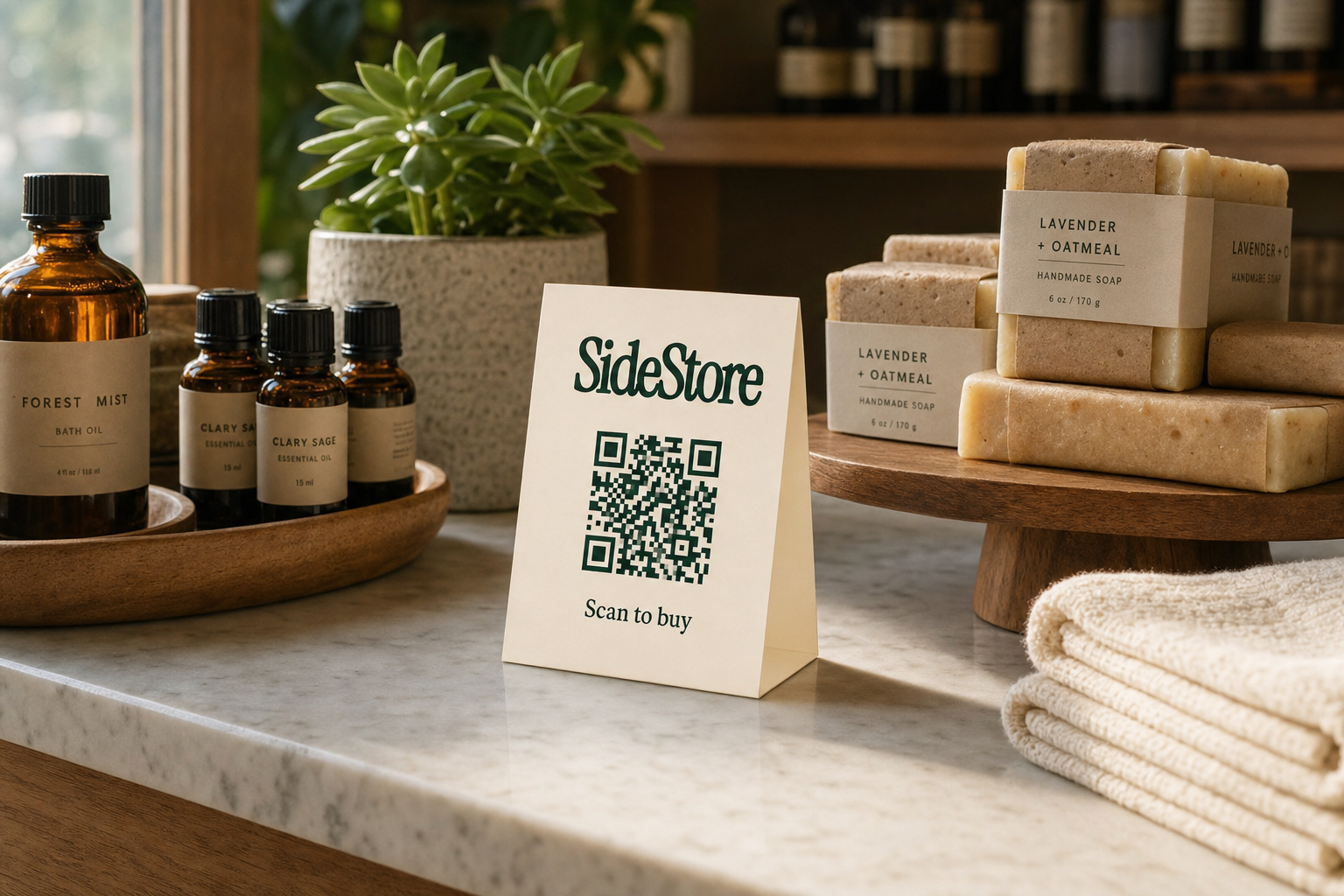
Hotels and reception spaces have guests who arrive in a new environment and are often looking to take something local home. A placement near the front desk or in a lobby lounge puts local makers' work in front of that impulse at precisely the right moment. How hotels can turn lobby space into retail revenue covers the practicalities in detail.
Bed and breakfasts have a similar dynamic to hotels but at smaller scale, with closer host-guest relationships that make product discovery feel personal rather than transactional. How B&Bs can earn from a small retail corner explains how to set this up in a compact space.
Boutiques already carry a curated product selection, and adding local makers on consignment extends that curation without the inventory risk of wholesale buying. How boutiques can add local products without buying inventory is the right starting point.
The Financial Mechanics: Splits, Payouts, and No Inventory Risk
The money in a shared retail space arrangement moves on sale, not on delivery. The host earns a percentage of each transaction; the maker receives the remainder. Nothing is owed until a customer pays.
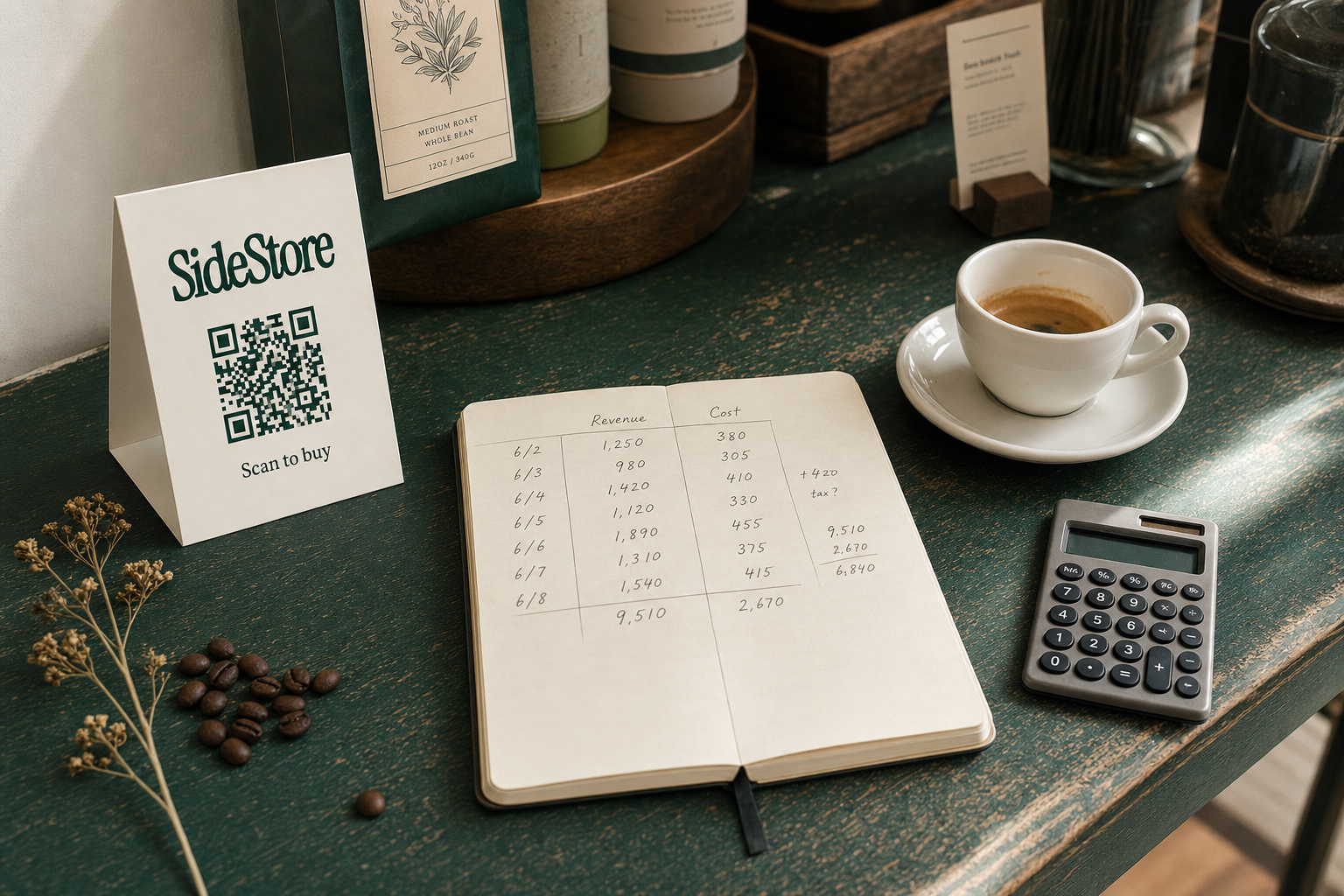
Take a concrete example. A maker prices a handmade candle at CHF 40. The agreed split is 20% to the host. When a customer buys one, the host receives CHF 8 and the maker receives CHF 32. The Retail Widget records the transaction, updates the stock count, and routes both amounts automatically. Neither party needs to calculate or transfer anything manually.
This structure removes two friction points that kill traditional consignment arrangements: the end-of-month reconciliation and the manual bank transfer. With automatic split settlement, the payout happens at the point of sale. The host sees their earnings accumulate in real time. The maker sees exactly which placements are generating revenue and which are not.
The inventory risk point is equally important for hosts considering shared retail space. You do not buy the stock. You do not hold the financial exposure if it does not sell. If a placement underperforms, you have lost shelf space for a period, not money. That is a fundamentally different risk profile from any wholesale arrangement, where you purchase stock upfront and own the downside.
For venues with high footfall that want to maximise the earning potential of idle surfaces, how high-traffic retailers can monetize idle shelf space outlines the mechanics in a higher-volume context.
Sharing Retail Space: Consignment vs. Pop-Up Rental vs. Wholesale
Not all shared retail arrangements are the same, and the differences have real financial consequences for both parties. The table below sets out the three main models clearly.
| Model | Who owns stock | Host earns | Maker pays upfront | Inventory risk |
|---|---|---|---|---|
| Consignment (SideStore) | Maker retains ownership until sale | Percentage of each sale | Nothing | None for host; maker holds unsold stock |
| Pop-up rental | Maker owns stock | Fixed space rental fee | Rental fee, regardless of sales | Maker bears all risk; host earns regardless |
| Wholesale | Merchant buys stock outright | Full retail margin | Nothing (sells to merchant) | Merchant owns the downside |
Consignment is the only model where neither party pays before a sale happens. Pop-up rental shifts all financial risk to the maker. Wholesale shifts all inventory risk to the merchant. What consignment means goes deeper on the legal and financial distinctions if you need to explain the model to a prospective host or maker partner.
For most independent makers and for most venues with idle shelf space, consignment through SideStore is the arrangement that removes the most friction from both sides of the negotiation.
How to Set Up a Shared Retail Space Arrangement
Setting up a shared retail space arrangement through SideStore takes four steps, and most of the technical work is handled by the Retail Widget. You do not need a separate point-of-sale system or any specialist equipment.
Step 1 (Merchant): Create the placement in the Retail Widget. The merchant sets up the placement in SideStore, defines the shelf or surface being offered, and agrees on the revenue split percentage with the maker. This is where the placement attribution is configured, so every sale is linked to the correct location.
Step 2 (Maker): Add the product and set pricing. The maker lists the product in SideStore, confirms the price, and the Retail Widget calculates the split automatically based on the agreed percentage. No spreadsheet, no separate agreement document required.
Step 3 (Either party): Activate checkout with the QR card. The maker can print a SideStore QR code card and attach it directly to each product. Alternatively, the merchant can display a single SideStore card for the whole placement. Either way, customers scan to pay on their phone. Read how the SideStore QR card works for setup detail. The QR checkout is one function of the Retail Widget, which also handles stock tracking, payouts, and placement management.
Step 4 (Merchant): Monitor stock and manage the placement. The Retail Widget tracks inventory in real time. When stock runs low, the maker is notified. When a placement ends, the unsold stock is returned to the maker and the placement is closed in the dashboard. Offboarding is as clean as onboarding.
For makers who want to build distribution across multiple venues at once, how makers can sell products without opening a retail store explains how to manage a distributed consignment network from one dashboard.
What Makers Get From Sharing Retail Space
For makers, sharing retail space through consignment solves a real and specific problem: getting physical distribution without the cost of a fixed store. That is harder than it sounds when you are independent and not yet established.
Wholesale requires you to offer steep discounts so a retailer can mark up and profit. Pop-up rental requires you to pay regardless of sales. Consignment asks neither. You retain ownership of your stock, pay nothing upfront to the host, and earn per sale. The trade-off is the split: the host's percentage reduces your per-unit margin. That is an honest cost, and it is worth naming plainly. You are effectively paying for foot traffic access with a slice of each sale, which is a reasonable exchange when the alternative is a weekend market table or no offline presence at all.
If you have been weighing alternatives to weekend markets for artists and small brands, consignment placement is one of the most scalable. One placement is low effort. Ten placements, run through a single dashboard, start to look like a real distribution network. How to sell handmade products in physical stores on consignment covers the practical steps from pricing to delivery.
Start With One Shelf
Sharing retail space starts with a single placement. If you are a merchant, one shelf near your counter is enough to begin earning from space that is currently doing nothing. Make money from unused shelf space shows you exactly how. If you are a maker, one well-chosen venue gives you real data on what sells, where, and at what price before you commit to anything larger.
Build a consignment network without opening a store of your own.