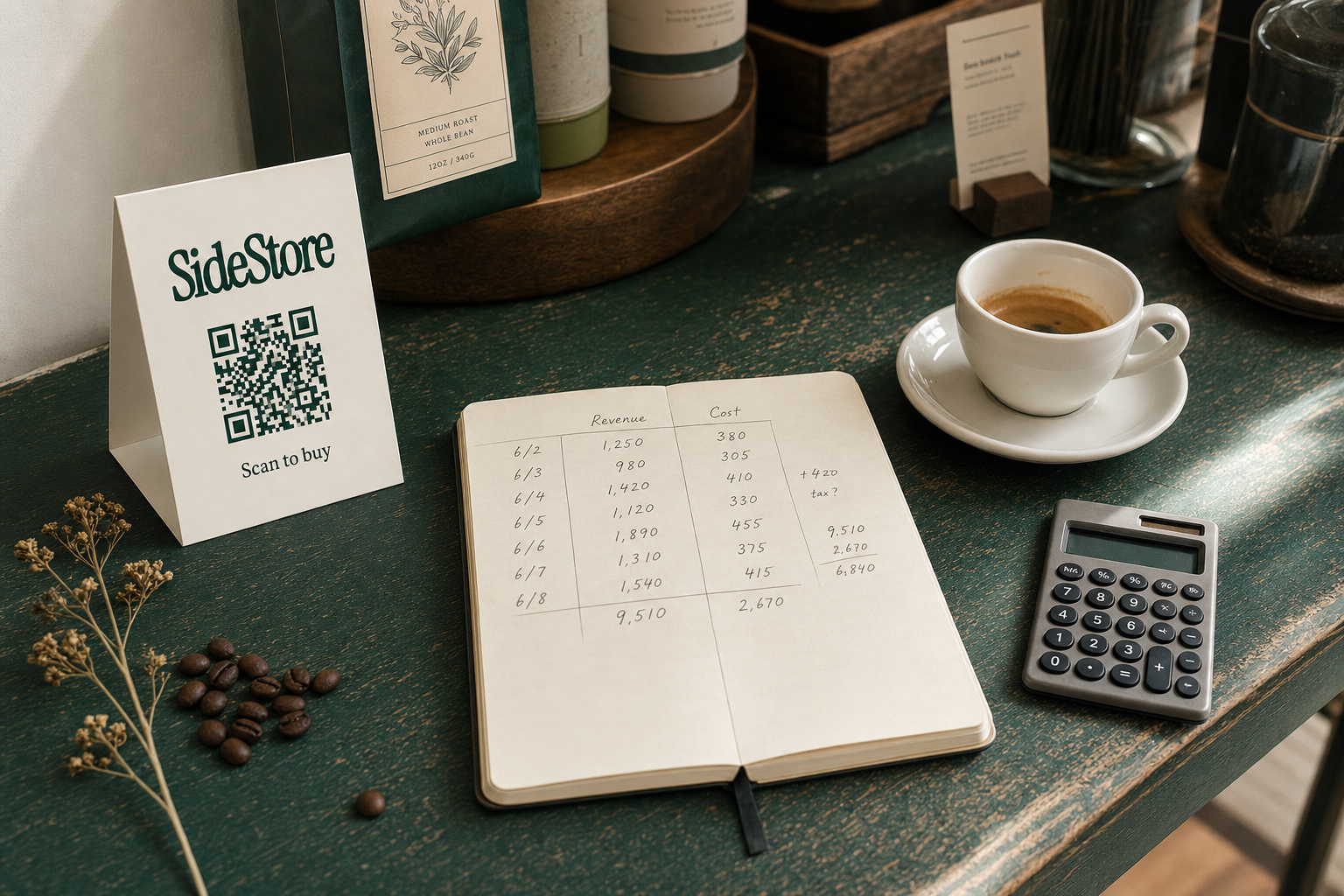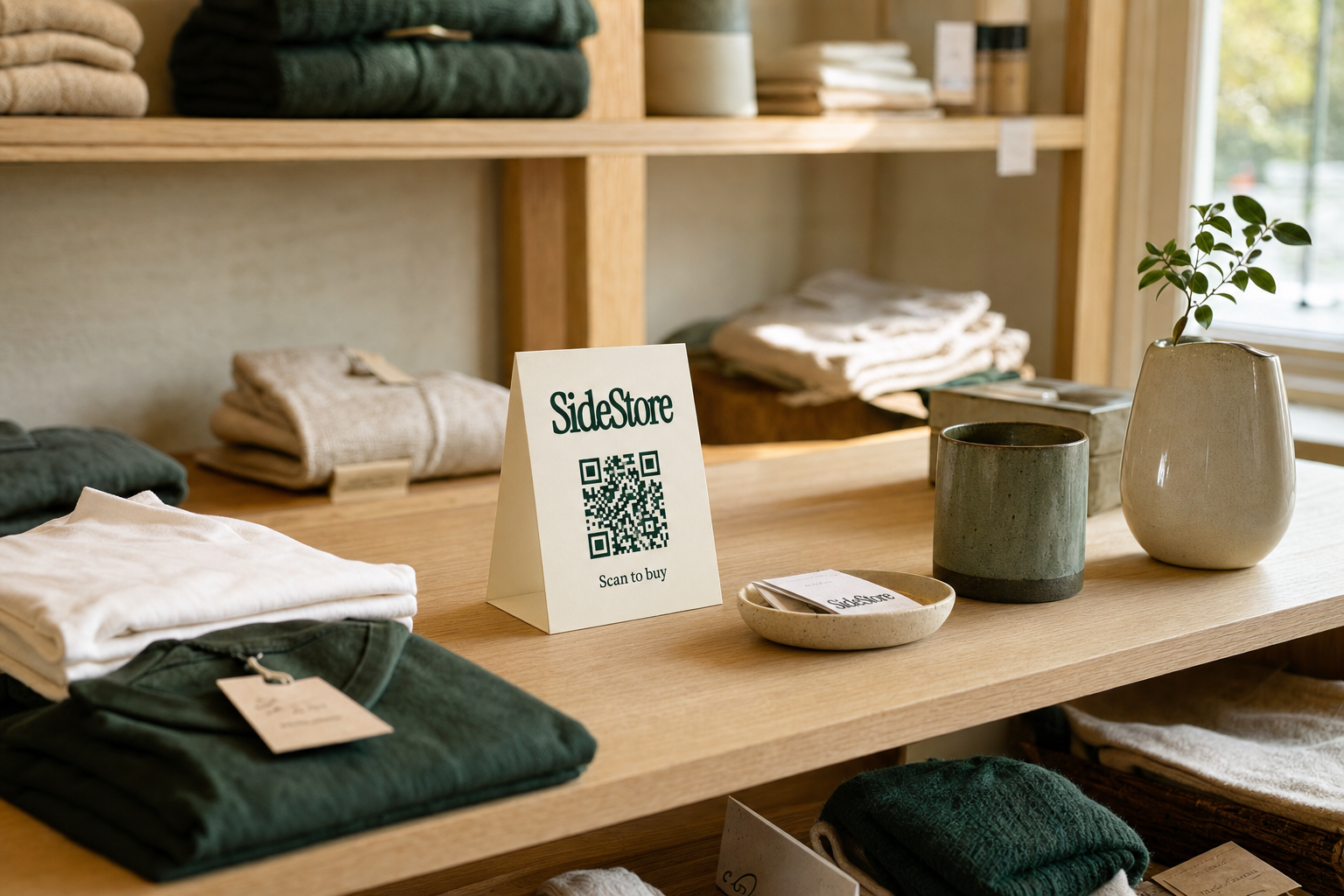
Boutique inventory is the curated selection you stock, display, and sell in your retail space. Most new boutiques open with between 100 and 200 SKUs, but the right number depends on three things: your square footage, your price point, and your sourcing model. A 400-square-foot accessories shop and a 1,200-square-foot clothing store need completely different buying plans.
The honest answer: no single number fits every boutique. Start by understanding boutique inventory management principles before you place a wholesale order. Then browse boutique inventory for sale options to see what minimum order quantities actually look like.
Three variables shape your opening count: the physical space you need to fill, your margin structure at your price tier, and whether you buy wholesale, source on demand, or use consignment stock to fill gaps without upfront spend. The sections below work through each one with real numbers.
How Many SKUs Does a New Boutique Actually Need?
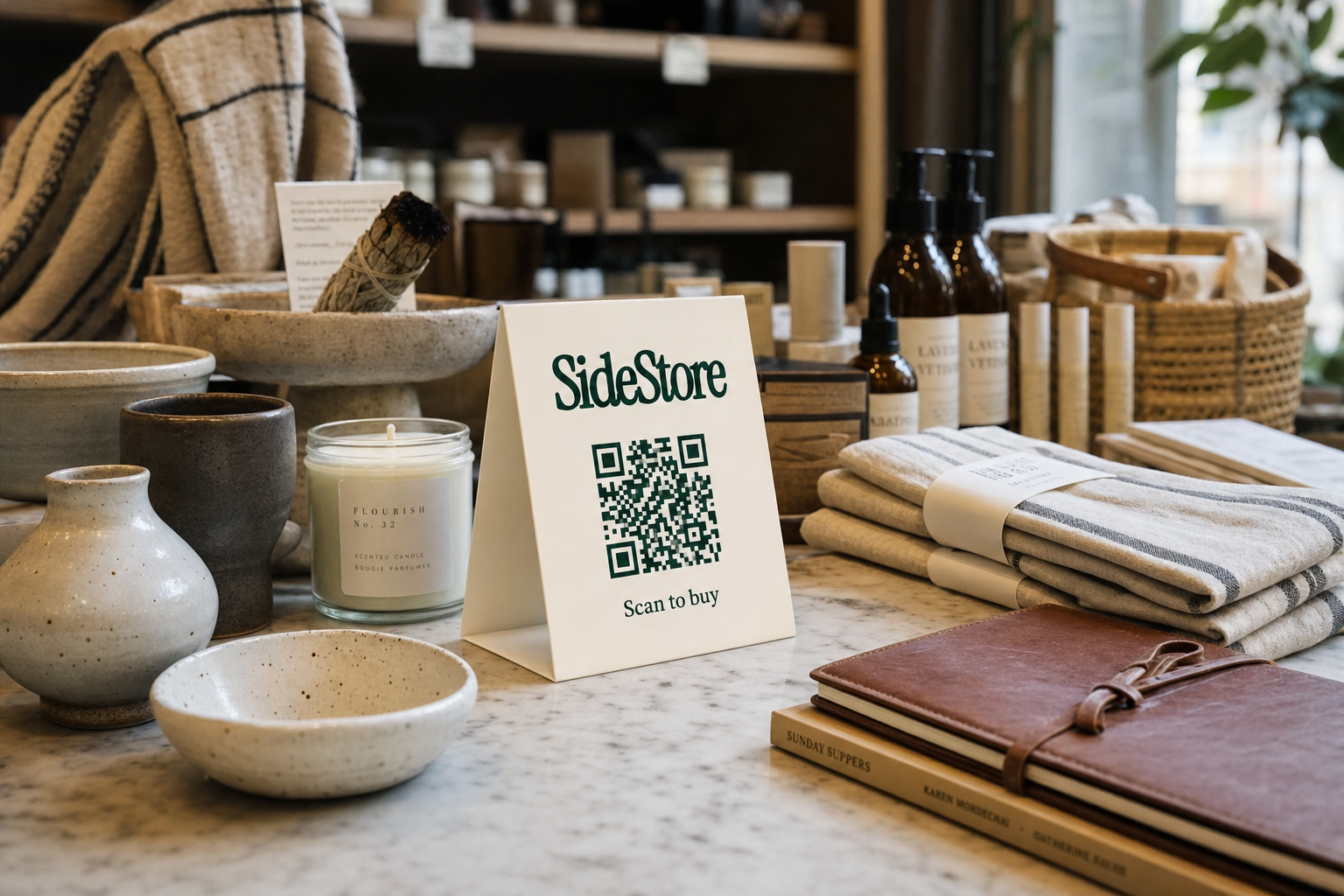
A good opening range for a physical boutique is 80 to 150 SKUs, with two to four units of depth per SKU. This keeps your floor looking full without locking up so much cash that you cannot reorder bestsellers.
Square footage gives you a concrete anchor. A common retail guideline is roughly one distinct SKU per four to six square feet of selling floor. A 500-square-foot boutique has about 350 square feet of actual selling floor once you subtract fixtures, fitting room, and checkout counter. At one SKU per five square feet, that is about 70 distinct products. Add two to three units of depth per SKU and your opening unit count lands around 175 to 210 pieces.
SKU breadth versus unit depth
Breadth is the number of distinct products you carry. Depth is how many units you hold of each. These pull against each other, and the right balance shifts with your price tier.
At a lower price point (items retailing under $40), customers browse fast and impulse-buy. Breadth matters more: a wider assortment gives shoppers more reasons to pick something up. Aim for shallower depth, perhaps two units per SKU, and a wider range.
At a higher price point ($150 and above), customers are deliberate. They compare, they return, they need to see the item more than once before buying. Depth matters here. Carrying four to six units of a $180 silk scarf gives you restock insurance and prevents a stockout during a slow reorder cycle.
A worked example: high-price jewellery boutique
Imagine a 600-square-foot jewellery boutique with 420 square feet of selling floor. At one SKU per six square feet, that is 70 distinct SKUs. At four units each, your opening order is 280 units. At an average wholesale cost of $55 per piece, your opening inventory spend is roughly $15,400 before freight. That number becomes your planning anchor.
For a digital-first launch, see how much inventory to start an online boutique, the logic differs from physical retail.
Depth Versus Breadth: The Trade-Off Every Buyer Faces
Buy too narrow and you run out of bestsellers mid-season. Buy too wide and you end up with slow-moving stock that ties up cash and clutters your floor. Most new boutiques make one of these mistakes in their first buy.
The practical hybrid is a 70/30 rule: put roughly 70 percent of your opening budget into a tighter core range with solid depth, and reserve 30 percent for broader, shallower "test" SKUs. Test products let you reorder winners or clear losers quickly.
The real risk of going too broad
When you spread your budget across too many SKUs, you end up with one or two units of everything. One sells, the other sits. You cannot reorder the winner fast enough, and you are stuck with the loser. That slow mover occupies shelf space and capital both. Read how to get rid of boutique inventory before you open, not after, so you understand the clearance cost of over-buying from the start.
The real risk of going too deep
Concentrating your entire budget in a few SKUs feels safe, but it makes you fragile. If one category underperforms, you have no alternatives to drive traffic. A monolithic assortment also makes your boutique feel repetitive, which shortens customer visits.
Finding the balance
Reserve 30 percent of your opening budget for test SKUs drawn from sourcing boutique inventory for sale options that carry lower minimum orders: small-batch makers, sample sale suppliers, or consignment arrangements. Small initial commitments on test products let you validate demand before you go deep.
Budgeting for Opening Inventory: The Numbers to Know
Opening inventory for a small boutique typically costs between $10,000 and $25,000, depending on size, price tier, and sourcing mix. That range is wide because the inputs vary sharply: a gift shop carrying $15 candles needs different depth than a boutique carrying $300 handbags.
Work backward from your selling price to your cost of goods. A standard boutique keystone markup is a two-times multiple: a product that retails at $60 costs you roughly $30 wholesale. That means for every $1,000 of retail inventory value on your floor, you have spent about $500. A boutique targeting $50,000 in opening retail value needs approximately $25,000 in cost-of-goods.
Inventory turn as a planning tool
Inventory turnover tells you how many times you sell through your entire stock in a year. A boutique turning inventory three times annually sells its full stock once every four months. Before you open, set a turn target. If you plan for three turns, your annual cost-of-goods target is three times your opening inventory spend. At $15,000 opening spend and three turns, you are planning $45,000 in wholesale purchases per year, funded by the sales from each prior cycle.
The cash-flow trap
The most common opening mistake is front-loading inventory spend. Boutique owners use nearly all their capital to fill the floor on day one, then have nothing left for reorders when bestsellers sell out in the first six weeks. The fix is to open at 70 to 80 percent of your floor's capacity, hold 20 to 30 percent of your buying budget in reserve, and replenish only what proves it can sell.
For ongoing numbers beyond opening, boutique inventory management covers turn targets, reorder points, and the metrics that separate a well-run floor from an overloaded one.
Wholesale, On-Demand, and Consignment: Which Sourcing Model Fits Your Stage?
The sourcing model you choose shapes your upfront cost, your risk, and how quickly you can adapt. Wholesale gives you the most control and the highest margins, but demands capital and commitment. Consignment gives you zero upfront cost and no inventory risk. On-demand sits in between.
| Sourcing Model | Upfront Cost | Inventory Risk | Minimum Order | Best For |
|---|---|---|---|---|
| Wholesale | High | High (you own unsold stock) | Usually 6-12 units per SKU | Proven SKUs, established boutiques |
| On-demand / dropship | None to low | Low (you order after the sale) | Often 1 unit | Testing new SKUs, online-first boutiques |
| Consignment | None | None (maker owns the stock) | Flexible | New boutiques filling shelf space, merchants hosting makers |
Consignment in plain mechanics
When you host makers on consignment, the maker places their products in your space and you receive a share of each sale automatically. No purchase order, no warehouse risk, no stock to return. SideStore runs this through the Retail Widget, the interface for placing and managing consignment products end to end.
The Retail Widget handles scan-to-pay checkout via a printable QR card, live stock tracking so you always know what is on your shelf, and automatic split payouts that distribute each sale between you and the maker the moment a transaction completes. The QR checkout is one function of the Retail Widget, not the whole product. The Retail Widget is what you use to set placement terms, track inventory, and receive your split in real time.
For more on the mechanics, see selling on consignment, selling through consignment, and if you are considering a no-inventory opening, starting a boutique with no inventory lays out what that looks like in practice.
How to Fill Shelf Space Without Buying More Stock
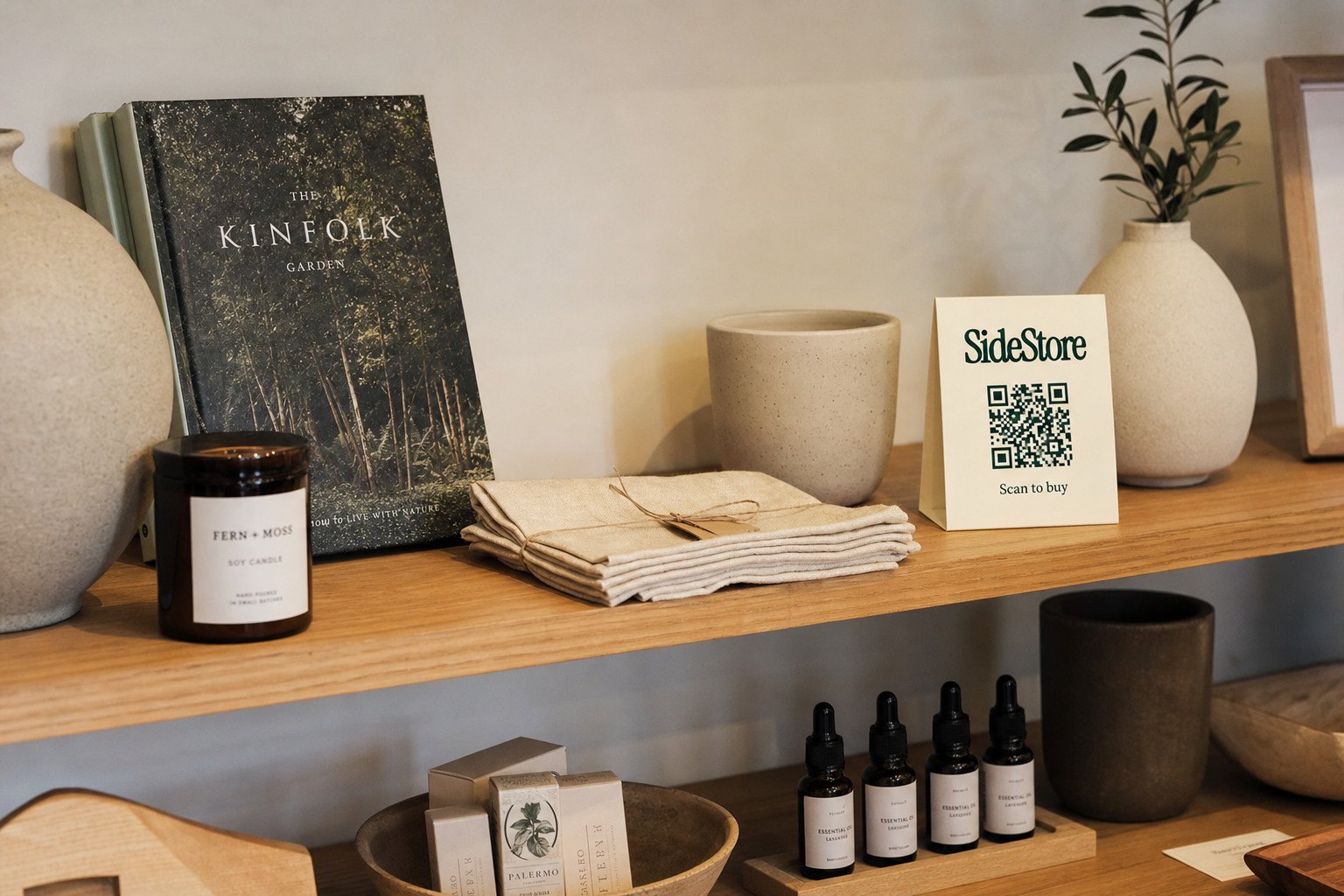
You can fill your floor without spending more on wholesale. The most capital-efficient boutiques use a combination of visual merchandising, consignment placements, and on-demand partnerships to maintain a full, varied floor at lower ongoing cost.
Three approaches work in practice:
Visual merchandising depth. Grouping products into styled vignettes makes a smaller assortment look intentional and complete. Fifteen products displayed as a cohesive lifestyle scene read as richer than thirty items racked by colour.
On-demand partnerships. Some suppliers let you display samples and order single units after a customer commits. This fills catalogue depth without buying dead stock.
Consignment placements. This is the most capital-efficient option for new boutiques with limited buying budgets. Makers place their products in your space through the SideStore Retail Widget at no cost to you. Scan-to-pay handles checkout via a printed QR card attached to the product or displayed for the whole placement. Split payouts credit your share automatically on each sale. You earn from shelf space you already have, with no purchase order and no stockroom commitment.
Consignment is not just a startup solution. Cafes, hotels, and bed and breakfasts all use the same model to activate space that would otherwise generate nothing. If you want to see how other venue types approach this, how cafes make money from unused shelf space, how hotels turn lobby space into retail revenue, and retail corner revenue for bed and breakfasts each show the model applied to a specific venue type.
A Phased Inventory Plan: From Opening Day to Month Six
Phase your buying rather than committing everything upfront. Open at 70 to 80 percent floor capacity, hold a cash reserve, and let your first weeks of sales data tell you what to reorder and what to replace.
| Phase | Timeline | Action | Success Metric |
|---|---|---|---|
| Pre-open | Weeks -4 to -1 | Place opening wholesale order (70% of budget). Set up Retail Widget for any consignment placements. | Floor looks full; 20-30% of buying budget still in reserve |
| Opening | Weeks 1-2 | Open at partial capacity. Track scan-to-pay transactions and stock levels in real time. | At least one SKU sells out, proving demand exists |
| Early reorder | Weeks 3-6 | Reorder proven bestsellers with held-back budget. Pull slow SKUs to clearance or return if possible. | Reorder rate covers at least 50% of reserve spend |
| Mid-season review | Month 3 | Analyse turn by SKU. Add new test SKUs via consignment to avoid upfront risk. | Turn rate on track against your opening target |
| Seasonal refresh | Month 5-6 | Begin next-season buying based on actual sell-through data. Adjust depth and breadth by category. | Fewer residual units, higher average sell-through rate |
The logic of phasing is simple: your opening instinct about what will sell is less reliable than six weeks of actual transaction data. Consignment placements fit perfectly into the test phases (months three and beyond) because you can add new products to your floor without a purchase order, observe how customers respond, and reorder wholesale only when demand is proven.
For the ongoing cadence beyond month six, ongoing boutique inventory management covers the review cycles and reorder frameworks that keep a boutique floor healthy season after season.
Frequently Asked Questions
The questions below come up repeatedly from boutique owners planning their opening stock. Each answer leads with the direct response, then adds the context that matters most.
How much does it cost to stock a boutique for the first time?
A small boutique typically needs between $10,000 and $25,000 to stock a 400 to 800 square foot floor at opening. The range shifts based on your price tier and sourcing mix: higher price-point products cost more per unit at wholesale, and a consignment arrangement can reduce upfront spend substantially for any products you bring in on that basis.
What is a good inventory turnover rate for a boutique?
Three to four turns per year is a common target for a small independent boutique. At three turns, you are selling through your full stock roughly every four months, which gives you enough margin cycle to fund reorders from sales rather than from additional debt.
Can I open a boutique with consignment stock only?
Yes, though most boutiques open with a mix. A consignment-only opening is genuinely viable for a merchant who has strong foot traffic but limited capital. The Retail Widget manages the placement end to end, so the operational overhead is low. Explore alternatives to weekend markets for makers for context on the kinds of makers actively looking for consignment placements in boutique spaces.
How do I know if I have too much inventory?
The clearest signal is a turn rate below two per year: you are not cycling stock fast enough to fund reorders without new capital. Other signals include a floor that feels cluttered, a stockroom with items that have not moved in 60 days, and consistent markdowns needed to clear space. If you are already in that position, how to clear slow-moving boutique stock covers your options in order of margin impact.
The Bottom Line on Opening Inventory
Start with 80 to 150 SKUs, hold 20 to 30 percent of your buying budget in reserve, and let early sales data drive your reorders. Opening lean is not a compromise, it is the discipline that keeps you solvent long enough to learn what your customers actually want.
Your next step is to map your floor plan, calculate your square footage, and work backward to an opening unit count using the frameworks above. Then decide which shelf positions you fill with wholesale stock and which you fill with consignment placements through the SideStore Retail Widget, where scan-to-pay and automatic split payouts mean every maker placement earns without adding to your inventory risk.
Browse finding boutique inventory for sale to explore your sourcing options, or read selling on consignment to understand how to structure your first consignment placement from the host side.