title: Retail Space Sharing description: Retail space sharing lets merchants earn from idle shelf space and makers sell in real venues, no lease, no inventory risk. Here is exactly how it works. date: 2026-08-06 category: Merchants tags: [retail space sharing, consignment, consignment commerce, Retail Widget, merchants, makers, placements] primaryKeyword: retail space sharing
Retail space sharing is straightforward: a merchant makes unused shelf, counter, or floor space available to independent makers, who place their products there and pay the merchant a share of each sale instead of fixed rent.
If you run a cafe, boutique, hotel, or any venue with foot traffic and spare surface, you already own the infrastructure. Retail space sharing converts that idle space into real revenue. For independent makers, it opens a physical distribution channel without the cost of opening a store. The operationally cleanest form is consignment: the maker supplies products, the merchant hosts them, and payment flows automatically when a sale happens. Both sides avoid the upfront inventory risk that traditional wholesale demands. If you are considering selling on consignment for the first time, this guide covers every mechanic you need.
Three Models of Retail Space Sharing: Which One Fits
The right model depends on who carries stock risk and how much operational effort you are willing to absorb. Three dominate: fixed lease, pop-up, and consignment. Each solves a different problem.
| Model | Who owns the stock | Upfront cost to host | Revenue model | Operational effort |
|---|---|---|---|---|
| Fixed lease | Tenant (maker or brand) | None (rent paid by tenant) | Fixed monthly rent, regardless of sales | Low: collect rent, done |
| Pop-up | Pop-up operator | None (short-term licence fee paid by operator) | Fixed licence fee or daily rate | Medium: schedule, coordinate, clean up |
| Consignment | Maker (until sold) | Zero | Percentage of each sale, paid automatically on transaction | Low: accept stock, let the Retail Widget run settlement |
Fixed lease gives predictable revenue but zero upside if the tenant sells well. The maker carries all commercial risk. Pop-up brings novelty and a fixed fee, but it is episodic: income stops when the pop-up leaves. Consignment is the lowest-effort model for merchants because you carry no inventory risk and earn proportionally to what actually sells.
The mechanics vary by venue type. Coffee shop retail follows different buying behaviour than a hotel lobby or a boutique browse. Hotels turning lobby space into retail revenue face different dwell times than a neighbourhood cafe. The table above applies across all three, but product selection and placement strategy shift with your space.
How Retail Space Sharing on Consignment Actually Works
Consignment retail space sharing follows a clear sequence: a maker supplies products to a merchant space, the Retail Widget manages the placement, and when a customer buys, settlement splits automatically between maker and host. No invoicing, no chasing, no manual reconciliation.
Here is the end-to-end flow.
Step 1: The maker creates a placement. Using the Retail Widget, the maker configures the product, sets the price, and defines the consignment split with the merchant. The Retail Widget is the full consignment-management interface. It handles stock tracking, placement attribution, checkout, and automatic split settlement. The QR checkout is one function within it, not the whole product.
Step 2: Products arrive in the merchant space. The maker delivers physical stock. The merchant assigns it a spot on the shelf, counter, or display. No purchase required: the merchant never buys the stock.
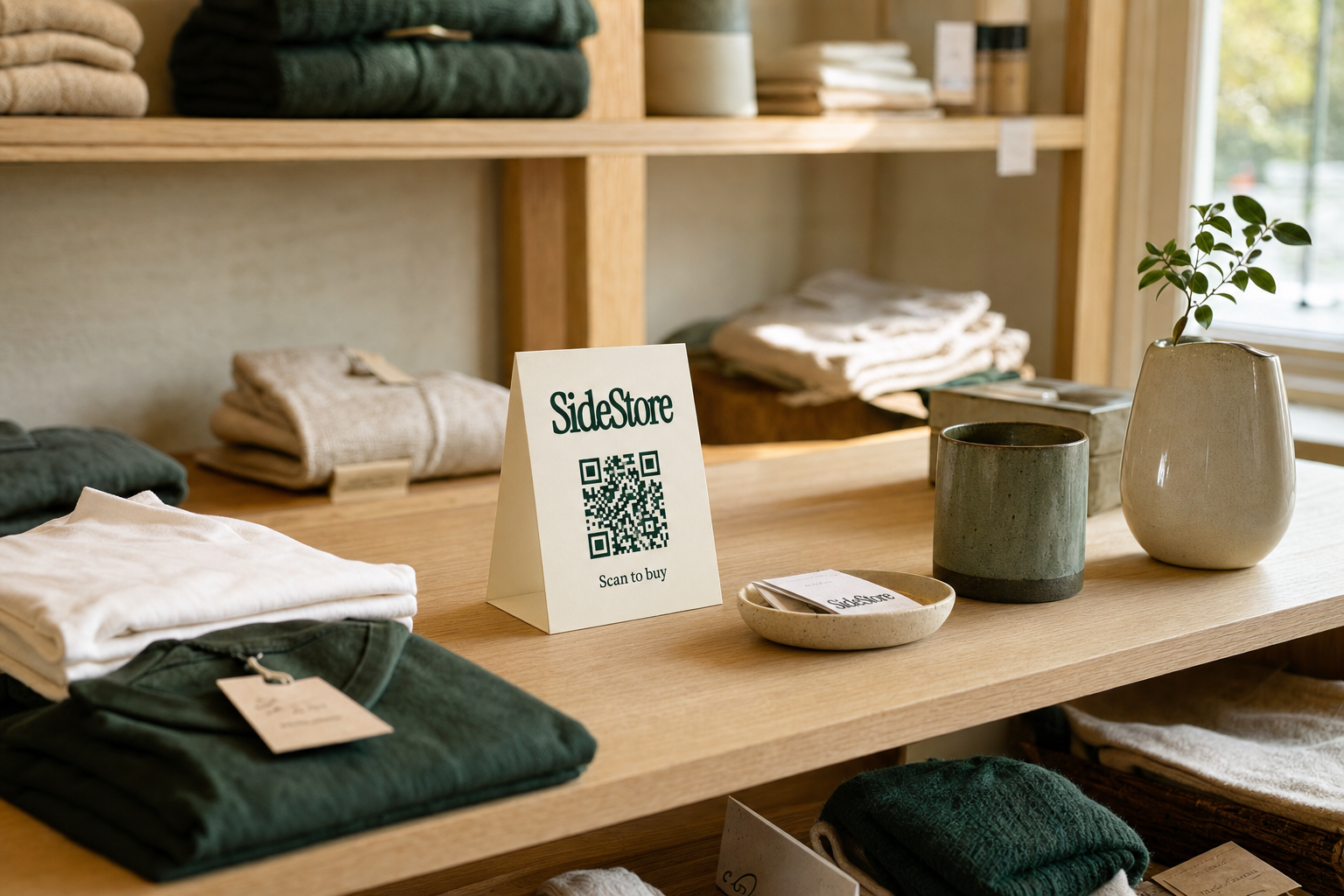
Step 3: The placement goes live. A SideStore QR card is displayed. A maker can print a QR card and attach it to their own product. Alternatively, the merchant can display a single SideStore QR card covering all products in the placement. A customer scans it, selects the item, and pays.
Step 4: Stock updates automatically. The Retail Widget tracks inventory in real time. When a unit sells, stock count drops. The merchant sees live availability without counting anything by hand.
Step 5: Settlement runs automatically. On each transaction, the agreed split pays out to maker and merchant host. No month-end invoice. No manual transfer.
Selling through consignment removes the cash-flow gap that traditional wholesale creates for makers. For merchants, how cafes earn from unused shelf space breaks down practical revenue mechanics for one of the most common host venues.
What Merchants Gain From Sharing Their Retail Space
Merchants gain passive revenue from space earning nothing today. That is the core value. You are not adding a new business line or managing new staff. You place consignment products on a shelf that already exists and collect a share of every sale.
The effort is low. You accept the stock, display it, and let the Retail Widget handle checkout, live inventory tracking, and automatic split payouts. There is no purchase order, no supplier invoice, and no stock-take at month end.
Revenue scales with foot traffic and product fit. A well-chosen placement in a high-traffic venue earns more than a poorly chosen one in a quiet corridor. Be honest about both variables when evaluating a placement proposal from a maker.
Venue type matters. A boutique suits design objects, accessories, and limited-edition goods naturally. A cafe attracts browsers already in a relaxed buying mindset, and small-format products at accessible price points tend to move. A bed and breakfast draws guests who want to take a piece of the local experience home.
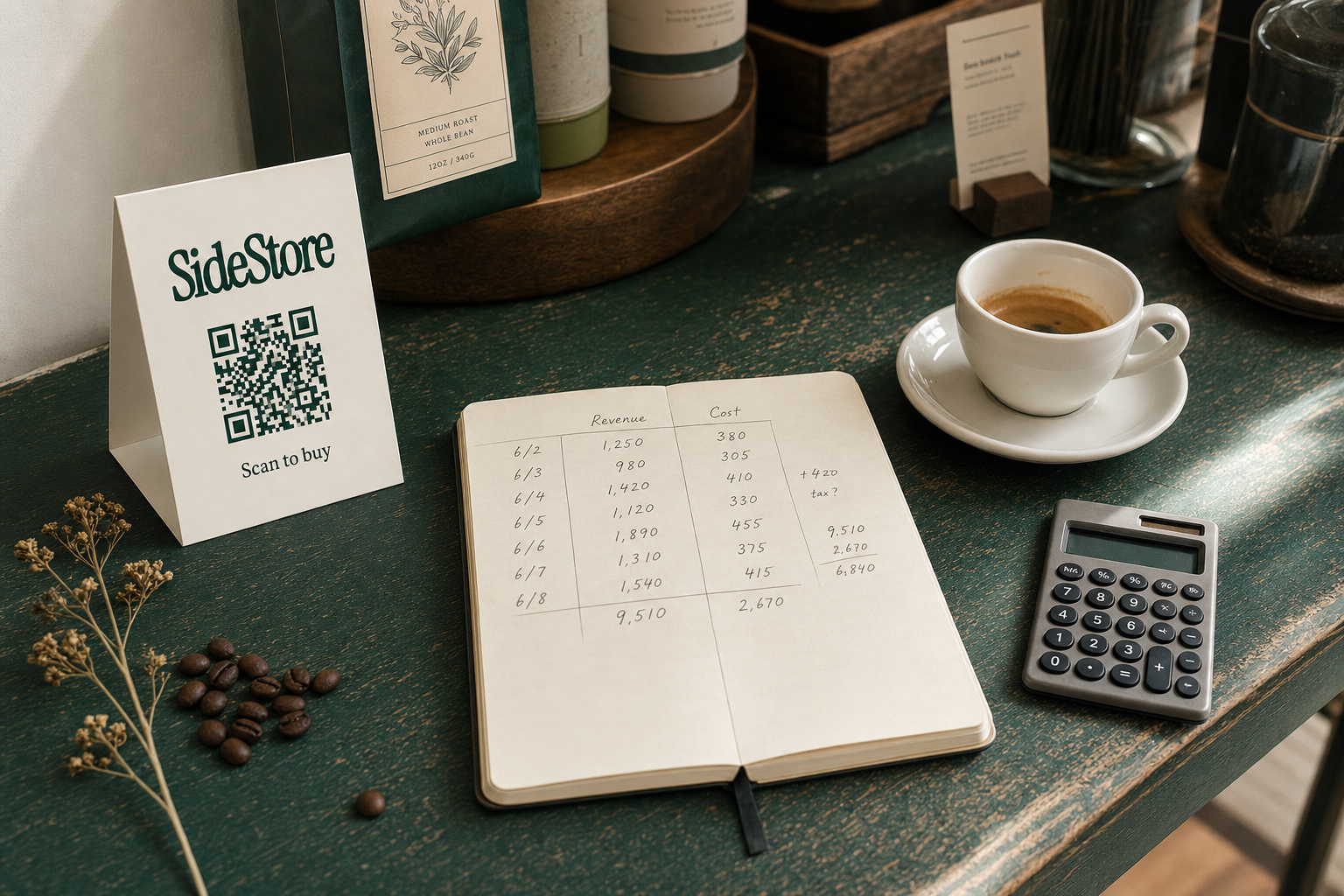
Coffee shop profit margins are often tighter than assumed, which makes consignment revenue meaningful even at modest volumes. How bed and breakfasts earn from a retail corner shows how a single well-stocked shelf adds genuine income to an existing hospitality business. For broader context, how much profit a coffee shop makes positions consignment revenue against your core operating lines.
One honest note: consignment revenue is variable, not guaranteed. It depends on what sells. That is also your protection: you never paid for the stock, so unsold products cost you nothing.
What Makers Gain From Placing Products in Shared Retail Space
For independent makers, retail space sharing on consignment solves the hardest part of building a physical business: getting your products into real venues without paying for a store, a lease, or a minimum order run.
Distribution is the barrier most makers hit first. You can make something excellent and still struggle to reach buyers beyond your existing audience, your weekend market table, or your online shop. Physical retail has always required either a wholesale relationship (which means selling at a discount and hoping for reorders) or your own storefront (which means fixed costs before a single product sells). Consignment is a third path. You supply stock on your terms, the merchant hosts it, and you earn the majority of each sale when it happens.
The practical gains are concrete. Your products appear in a real venue, in front of foot traffic you did not generate yourself. The Retail Widget tracks stock across every placement you have live, so you see what is selling where without calling each host. Split payouts happen automatically: you do not chase a merchant for a monthly transfer.
Alternatives to weekend markets for makers walks through why a consignment network across multiple venues compounds reach in a way a single market stall cannot. Selling without holding inventory addresses a related concern: many makers worry about overstocking starting out. Consignment does not eliminate inventory, but it means the merchant never holds the risk of it.
Your products earn while you work on the next thing. That is the shift consignment placement makes possible.
How to Set Up a Retail Space Sharing Arrangement
Setting up takes five clear phases. You start with a venue conversation and end with a live placement that tracks itself. The setup is not complicated, but skipping phases creates friction later.
| Phase | Action | Owner | Success Metric |
|---|---|---|---|
| 1. Venue match | Identify a merchant space whose foot traffic and audience fit your product category; have an initial conversation about available shelf space | Maker (or merchant prospecting makers) | Both parties agree the product fits the venue |
| 2. Terms agreement | Define the consignment split, the number of units to start with, and the display area | Both | Written or digital agreement with split percentage confirmed |
| 3. Placement configuration | Maker sets up the product in the Retail Widget: price, split, stock count, and placement attribution | Maker | Product live in the Retail Widget with correct split and stock |
| 4. Stock delivery and display | Maker delivers physical units; merchant assigns and prepares the display area; QR card is placed | Both | Products on shelf, QR card visible, placement showing live in dashboard |
| 5. Monitor and restock | Both parties review what is selling; maker restocks fast-moving lines; slow lines are rotated or withdrawn | Both | Stock count accurate in real time; restock triggered before units run to zero |
For merchants specifically, boutique inventory on consignment covers how to structure a first intake of consignment stock. If you have existing boutique stock not moving, moving boutique inventory through consignment addresses how a consignment arrangement can clear it without discounting.
One practical note on phase two: the split percentage is the most common source of later friction. Agree it explicitly, write it down, and make sure both sides understand whether the split is calculated on the full sale price or net of any payment processing fee. The Retail Widget applies the agreed split automatically, but it applies exactly what you set, so set it correctly from the start.
What Makes a Retail Space Sharing Placement Work
A placement works when three variables align: the venue has real foot traffic, the product fits the audience in that venue, and the display is good enough to stop a browser. All three matter. A well-displayed product in the wrong venue underperforms. A perfectly matched product hidden at the back of a quiet room earns little.
Foot traffic is the baseline. Without it, no placement model works. Before accepting a consignment proposal or pitching a venue, be honest about actual daily visitor numbers, not aspirational ones.
Product-audience fit is the variable most makers underestimate. A specialty coffee shop draws a specific buyer: curious, taste-driven, willing to spend on things that feel considered. Retail products in a coffee shop that match that sensibility, such as small-batch food products, locally made ceramics, or design-led stationery, tend to earn. The same products in a hotel with business travellers on tight schedules will move differently.
Display quality is within your direct control. Clear pricing, tidy presentation, and a visible QR card are the minimum. Products requiring explanation benefit from a short tag or card; do not assume the merchant's staff will explain for you.
On stock quantity, starting lean is often smarter than starting large. How much stock to start with is a question every maker faces, and in a consignment context the answer tilts toward enough to look well-stocked without crowding the display. The Retail Widget's live stock tracking tells you when to restock before the shelf goes bare.
Retail Space Sharing: Common Questions
Merchants and makers ask most often about four mechanics: who owns the stock, how payment works, what happens to unsold products, and how to manage scale. Here are direct answers.
Does the merchant have to buy the products in a consignment arrangement? No. In consignment, the maker retains ownership of stock until a customer buys it. The merchant hosts the products at no upfront cost and earns a share of each sale. This is the defining feature of what consignment means as a model.
How does payment work when a product sells on consignment? When a customer completes a purchase through the Retail Widget's scan-to-pay checkout, the agreed split pays out automatically to maker and merchant host. There is no manual invoicing or end-of-month transfer.
What happens to unsold products in a consignment deal? Unsold products remain the property of the maker. If a product is not moving, the maker can withdraw it, rotate it to a different venue, or adjust the price. The merchant has no liability for unsold stock.
How many products can a merchant host on consignment? There is no fixed ceiling. The practical limit is the display space you have and the number of placements you can keep looking tidy. Managing consignment inventory across multiple makers requires some light coordination, but the Retail Widget tracks stock per placement automatically.
Can a maker track sales across multiple consignment locations? Yes. The Retail Widget's placement attribution records which venue generated each sale. A maker running placements across several cafes, boutiques, or hotels sees sales and stock levels per location from a single dashboard.
Start With One Shelf
Retail space sharing on consignment is the simplest way for a merchant to earn from space that is currently idle, and for a maker to reach physical buyers without a fixed cost base.
If you are a merchant, identify one shelf or counter position and open a conversation with a local maker whose work fits your audience. If you are a maker, find one venue where your products belong and propose a consignment placement. The Retail Widget handles everything after: checkout, stock tracking, and automatic split settlement.
Get started with consignment and build a consignment network without opening a store of your own.