What Is a Non-Profit Coffee Shop?
A non-profit coffee shop is a café legally structured as a non-profit organisation, meaning any surplus it generates flows back into a social mission rather than into owners' pockets or shareholder dividends. If you're looking for one near you, the quickest route is Google Maps paired with a verification step: search the organisation's name plus "501(c)(3)" (United States) or "charitable incorporated organisation" (UK) to confirm the status is real.
These cafés pull espresso, sell pastries, and keep the Monday morning queue moving exactly like any independent shop. The difference is where the money goes. Surplus funds toward community programmes, job training for marginalised groups, mental health support, food access initiatives, or whatever mission sits at the café's core. That distinction matters if you want to spend your money somewhere it reaches a cause, or if you're a maker looking for a values-aligned space to place your products.
For a deeper breakdown of what makes a café non-profit, and for context on how café revenue actually works, the linked guides go deeper on each.
What Actually Makes a Coffee Shop Non-Profit?
A coffee shop qualifies as non-profit when it is registered under a legal structure that prohibits private profit distribution. In the United States that means 501(c)(3) status; in the United Kingdom, often a Community Interest Company (CIC) or charitable incorporated organisation. The café can earn revenue. It does earn revenue. But no individual owner takes a dividend or payout from any surplus.
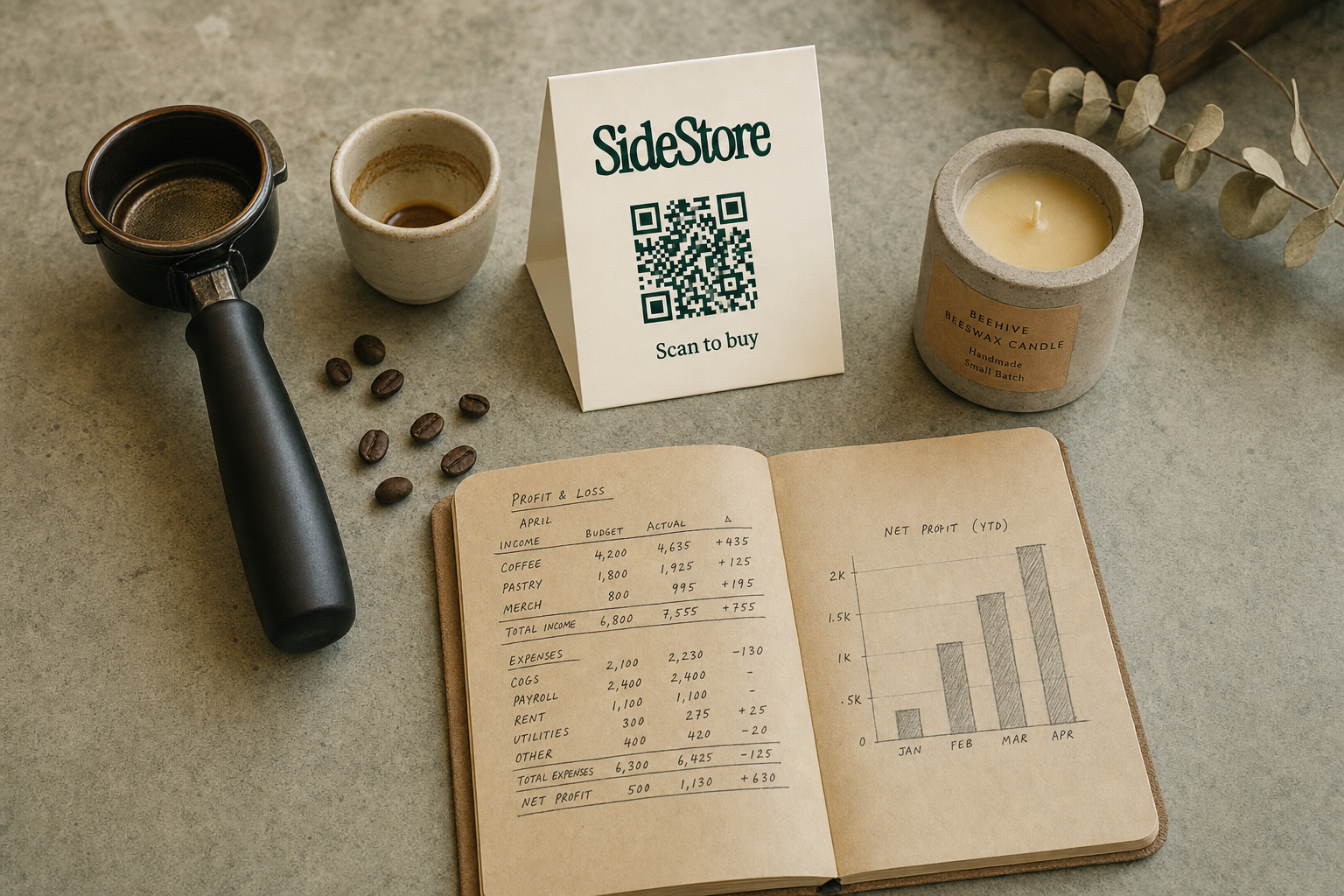
Here's what that means in practice. A standard café generates profit, and that profit belongs to whoever owns the business. A non-profit café generates surplus, the same mathematical result, revenue minus costs, but the surplus is legally bound to a stated mission. It can fund staff wages (including genuinely fair wages for the café's own team), pay down debt, or finance programmes. It cannot be extracted as personal income by a controlling shareholder.
This is also why non-profit cafés access funding streams unavailable to commercial operators: grants, charitable donations, and subsidised premises. Those additional income channels let them absorb the higher labour costs that often come with their social mission, such as employing people in supported work programmes who may need more training time or accommodation.
The trade-off is governance overhead. Non-profit status requires reporting to a regulatory body, maintaining a board of directors, and operating within the constraints of your registered mission. That accountability costs time and administrative resource that a sole-trader café owner simply does not carry.
For comparison, average coffee shop profit margin data shows how thin commercial margins already are, which makes the non-profit model's additional governance burden meaningful. And how profit works in a standard café gives you the baseline to measure against.
How to Find a Non-Profit Coffee Shop Near You
The most reliable way to find a non-profit café near you is to combine a location-based search with a verification step. Searching "coffee shop" alone will surface hundreds of results, but narrowing by mission or legal status filters for the cafés that actually fit. Here are five methods that work.
Search Google Maps with qualifying terms. Type "non-profit coffee shop [your city]" or "community café [your neighbourhood]" directly into Google Maps. Read the business descriptions carefully; genuine non-profits usually mention their charity number, mission, or community programme in the listing.
Check your national charity register. In the United States, the IRS Tax Exempt Organization Search lets you look up any organisation by name and confirm 501(c)(3) status. In the UK, the Charity Commission register does the same. If a café claims non-profit status, this is how you verify it in under two minutes.
Search local community noticeboards and neighbourhood apps. Platforms like Nextdoor frequently surface community-run cafés that have limited online presence. Non-profit cafés often rely on word-of-mouth and local networks rather than paid search advertising.
Contact your local council or community foundation. Many local authorities maintain directories of social enterprises and charitable organisations in their area. A community foundation will know exactly which cafés operate on a mission-driven model.
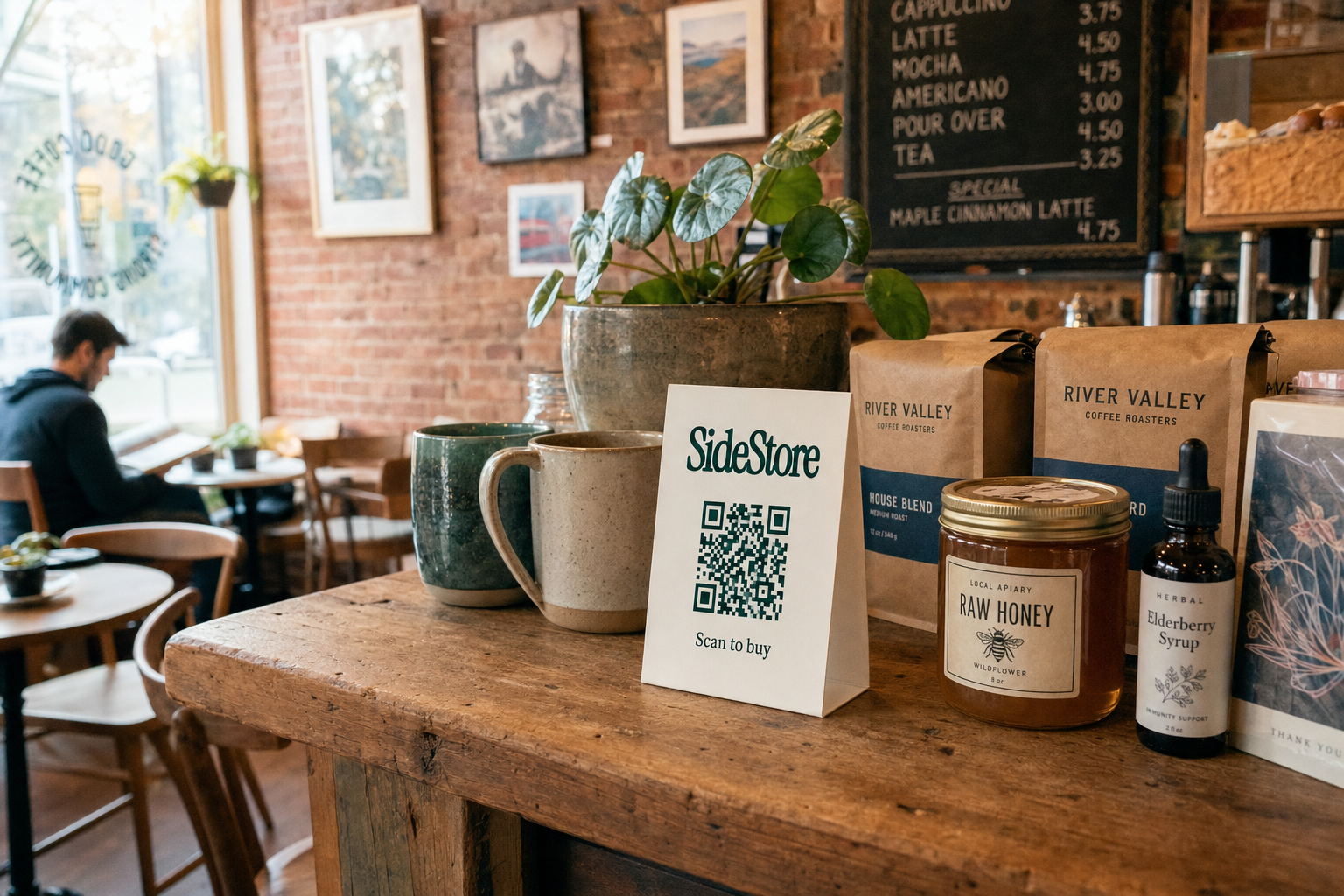
Look for retail partnerships with local makers. Non-profit cafés frequently host locally made goods on their shelves as an ancillary income stream. If you see handmade ceramics, small-batch coffee blends, or artisan goods alongside the espresso machine, there is a reasonable chance the café channels that retail income toward its mission. How coffee shops use retail to diversify income explains the mechanics behind that model.
Once you find a candidate, spend two minutes checking their registered status before assuming the label is accurate. The term "community café" is used loosely; legal non-profit status is specific and verifiable.
Non-Profit Café Models Compared
Not all non-profit cafés are structured the same way. The model a café uses determines who controls it, how surplus is allocated, and what trade-offs the team accepts. Here's a comparison of the four most common structures.
| Model | Legal Structure | Who Controls It | How Surplus Is Used | Key Trade-off |
|---|---|---|---|---|
| Charitable café | Registered charity (501(c)(3) / CIO) | Board of trustees | Funds the charity's stated mission | Heavy reporting obligations; restricted activities |
| Community Interest Company café | CIC (UK-specific) | Directors, with asset lock | Reinvested into community benefit | Less fundraising access than a full charity |
| Worker cooperative café | Cooperative legal entity | Worker-members equally | Distributed to members or reinvested | Governance by consensus can slow decisions |
| Social enterprise café | Variable (Ltd, LLC, etc.) | Owner / directors | Majority reinvested in mission by policy | "Social enterprise" is a label, not a legal status |
The distinction between the last row and the others matters most. "Social enterprise" is not a protected legal term in most jurisdictions, which means a café can use it without formal verification. If a café's social commitment matters to you, look for one of the first three structures and confirm registration. Coffee shop profit margins data puts the commercial context in perspective, and how much profit a coffee shop makes shows why surplus allocation decisions are meaningful even on modest revenues.
How Do Non-Profit Cafés Sustain Themselves Financially?
Non-profit cafés sustain themselves through a combination of trading income, grants, donations, and ancillary retail. Most rely on all four, because café margins alone rarely cover a mission-driven cost base. Here is how each stream works.
Trading income is the core: coffee, food, and drink sales. This works the same as any café, and it is the most reliable daily revenue. The challenge is that a non-profit café often carries higher labour costs if its mission involves employing people from supported groups, so trading income alone rarely achieves the surplus needed to fund programmes.
Grants and charitable funding supplement trading income. Registered charities and CICs can apply for local authority grants, lottery funding, and charitable trust awards that are entirely inaccessible to commercial operators. This structural advantage is one reason formal non-profit registration matters.
Donations and memberships provide predictable recurring income. Some non-profit cafés run "pay-it-forward" schemes or community membership programmes where regular supporters contribute a monthly amount in exchange for perks or simply out of goodwill.
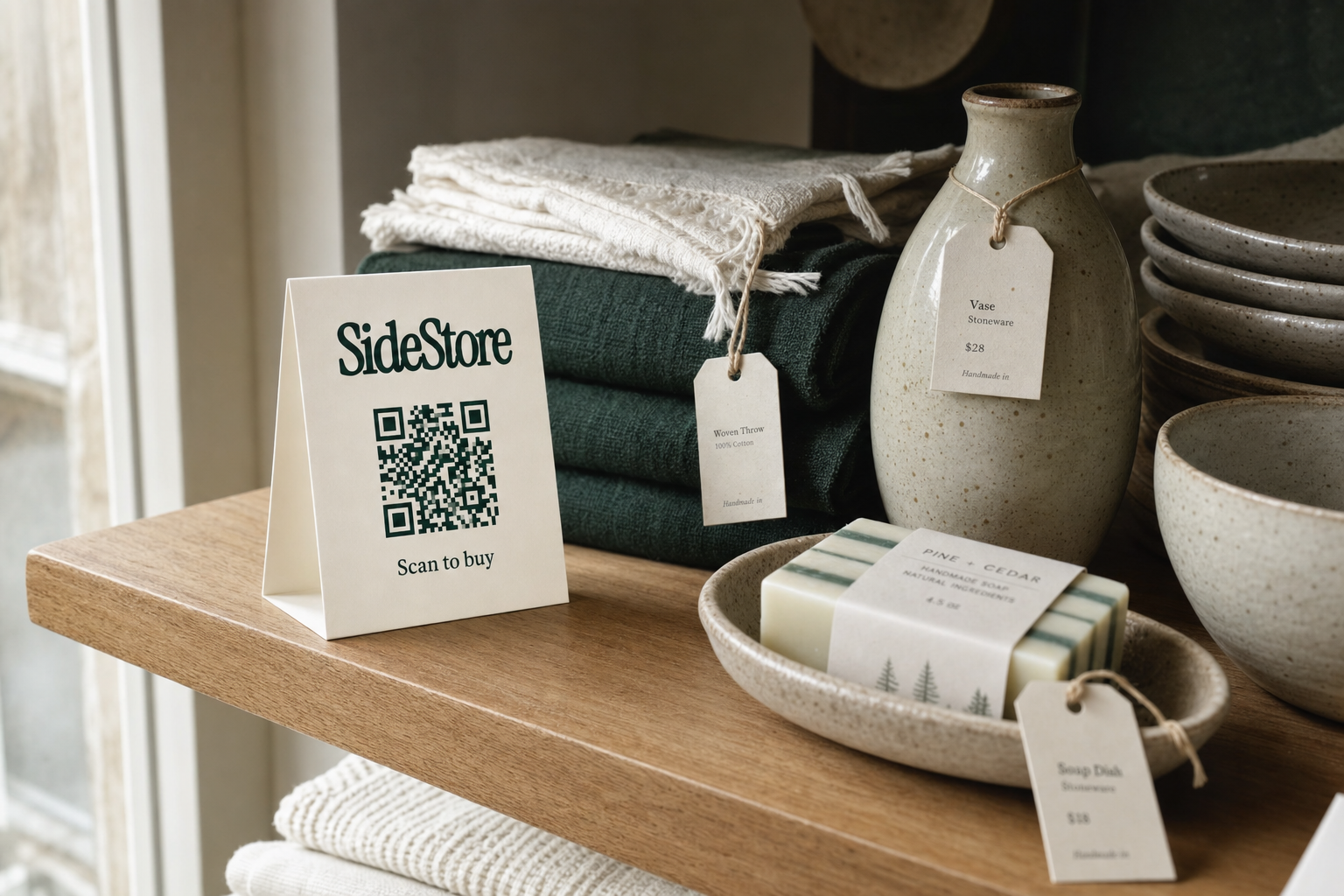
Consignment retail is the revenue stream most competitors overlook. Many non-profit cafés stock locally made goods, ceramics, prints, small-batch food products, handmade accessories, on a consignment basis. The café takes a percentage of each sale and the maker receives the rest, with no upfront cost to either party. Because the café holds no inventory risk, the shelf space costs them almost nothing to activate, and the income directly supports the mission. Selling on consignment, retail revenue for coffee shops, and coffee retail shop income streams each explore this mechanic from different angles.
Placing Your Products in a Non-Profit Café on Consignment
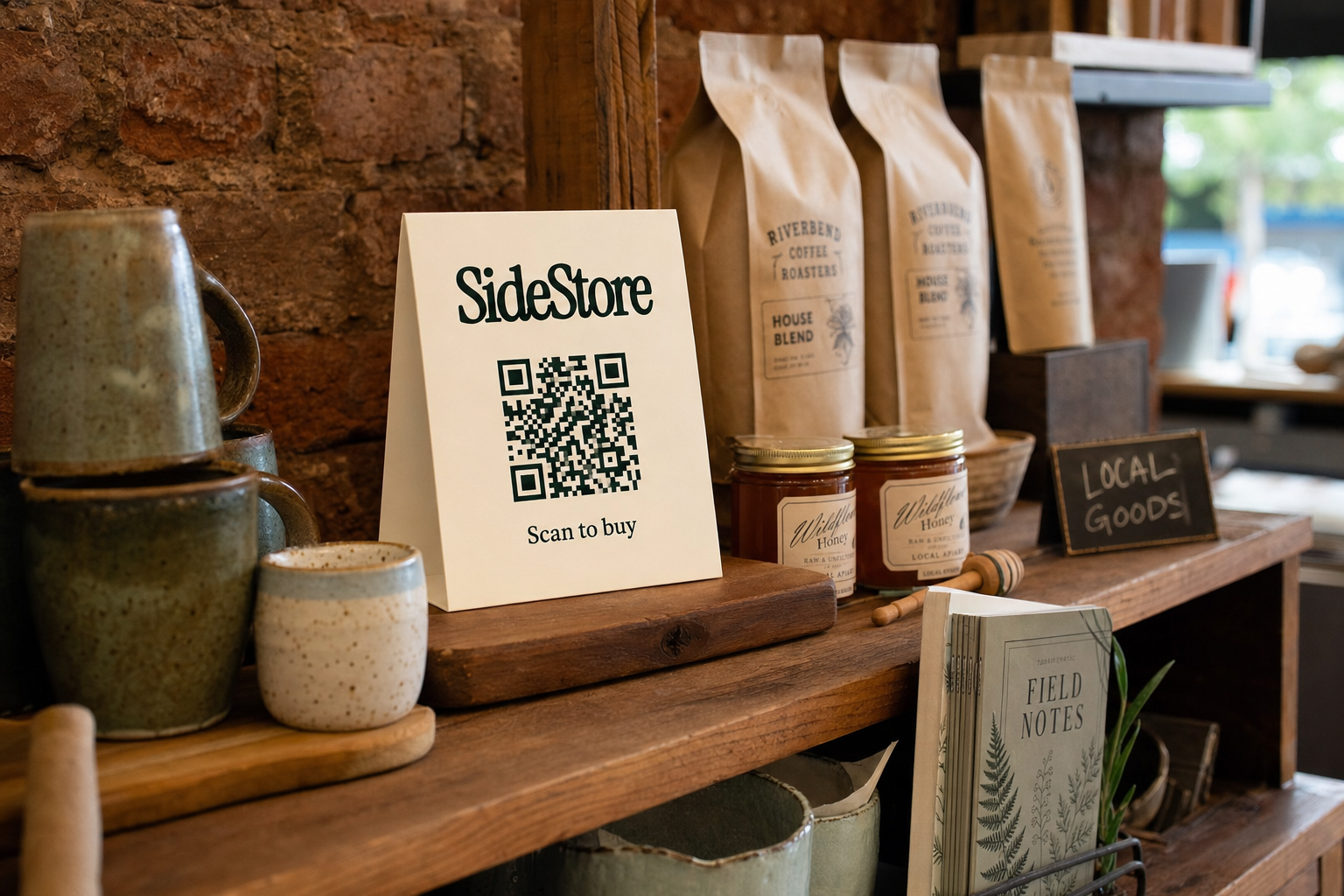
If you make physical products and want offline distribution, getting into a non-profit café on consignment is one of the most practical routes available. Particularly if opening your own shop or paying for a market stall every weekend is not viable. Getting into good retail spaces without a fixed shop is hard for independent makers. A non-profit café solves several problems at once: it offers footfall, a values-aligned customer base, and a low-friction entry point because there is no inventory purchase required from either side.
The process for approaching a café is straightforward. Contact the café manager directly, bring one or two sample products, explain the consignment model clearly, and agree on a split percentage upfront. Non-profit cafés vary in the splits they offer. There is no universal figure, and you should expect negotiation based on the café's margin needs and your product's price point. A common range sits somewhere between a 70/30 and a 60/40 split in the maker's favour, but that is a starting point, not a guarantee.
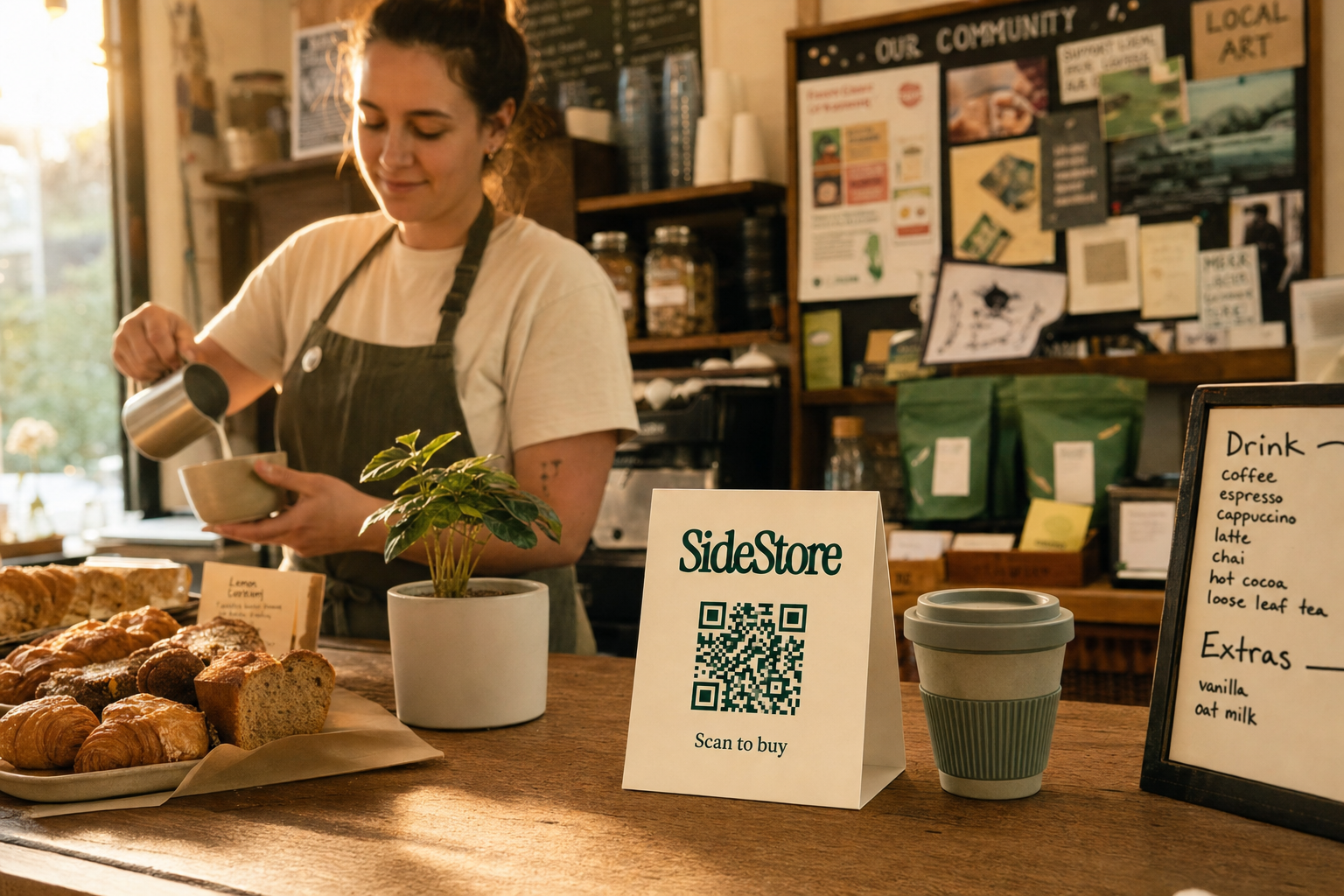
Managing a live placement well is where many makers lose money quietly. Stock disappears from shelves without notice. Payouts are informal. Attribution is guesswork. That is where a tool like SideStore's Retail Widget genuinely helps. The Retail Widget is the interface that manages the whole consignment placement: it handles checkout (including a scan-to-pay QR attached to your product or displayed at the café's point of sale), live stock tracking so you know when a shelf needs restocking, placement attribution so each sale is tied to the correct venue, and automatic split payouts so neither you nor the café manager is chasing invoices.
For makers weighing their options, alternatives to weekend markets for makers covers the full landscape, and how to sell through consignment walks through the practical steps in detail.
How to Support a Non-Profit Coffee Shop Near You
Supporting a non-profit coffee shop is straightforward: the most direct action is to spend money there regularly. Every purchase funds their mission directly, which is structurally different from spending at a commercial café where profit exits the community.
Beyond that, five actions make a meaningful difference.
Leave a detailed Google review. Search visibility drives footfall, and genuine reviews help non-profit cafés compete with well-funded commercial chains in local search results.
Buy any locally made goods on their shelves. Retail sales on consignment generate mission income at no cost to the café, and they support the independent makers placed there.
Tell people about them specifically. Word-of-mouth remains the most efficient marketing channel for community-run spaces with limited advertising budgets.
Attend events they host. Many non-profit cafés run community evenings, skill-sharing workshops, or fundraising events. Attendance supports the mission and strengthens the venue's case for continued grant funding.
Ask about membership or recurring support. Some non-profit cafés offer monthly membership programmes. A small recurring contribution provides the predictable income that makes financial planning easier for a mission-driven operation.
Browsing the locally made goods available in community retail spaces gives you a sense of what these shelves can carry when the consignment model is working well.
Frequently Asked Questions
Is a non-profit coffee shop free to visit?
No. A non-profit coffee shop charges for its products the same way any café does. "Non-profit" describes the legal structure and where surplus goes, not the pricing model. You pay for your coffee; the café just cannot distribute that revenue as private profit.
Can a non-profit coffee shop make money?
Yes. A non-profit café can and must generate revenue to survive. What it cannot do is distribute surplus as personal profit to owners or shareholders. Surplus must be reinvested in the mission or held as reserves. You can use a coffee shop profit margin calculator to understand what "surplus" looks like in practice.
How do I know if a coffee shop is really non-profit?
Check the national charity or non-profit register for your country. In the United States, use the IRS Tax Exempt Organization Search. In the United Kingdom, check the Charity Commission register. A café that cannot provide a registration number or charity number is making a claim you cannot verify.
Where to Go From Here
The practical next step depends on who you are. If you're searching for a non-profit coffee shop near you, the verification process takes less than five minutes and ensures your spending actually reaches the mission the café claims. If you're a maker looking for offline distribution, a consignment placement in a mission-driven café gives you footfall and values-aligned customers without the fixed costs of your own shop. If you're a café operator exploring revenue diversification, adding locally made goods on consignment activates shelf space you already have, with no inventory risk and no upfront outlay.
For makers weighing distribution options, selling without inventory covers the broader model, and average profit a coffee shop can expect gives café operators context for how consignment retail fits into the overall financial picture.
The Retail Widget manages consignment placements end to end: checkout, live stock tracking, placement attribution, and automatic split payouts between maker and host. It does not replace the relationship between a maker and a café; it makes that relationship precise and low-maintenance, so both sides can focus on the work rather than the administration.
Build a consignment network without opening a store of your own.