Getting inventory for an online boutique means choosing a sourcing model that matches your upfront capital, risk tolerance, and the product categories you want to carry. The five main routes are wholesale buying, consignment, dropshipping, trade show sourcing, and overseas manufacturing. Each differs sharply on how much cash you commit before a single sale, what margin you keep, and who absorbs unsold stock.
If you want the short answer: consignment and dropshipping let you test products with little or no upfront cost; wholesale and overseas sourcing deliver higher margins but require capital and carry real inventory risk. Most boutiques blend two or three models as they grow.
You can also start an online boutique with no inventory and add wholesale buying once you know which categories sell. Questions about volume? The guide on how much inventory to start with covers that directly.
Below you will find a side-by-side comparison table of every sourcing model, then a plain-language breakdown of each one.
The Five Ways to Source Inventory for Your Boutique
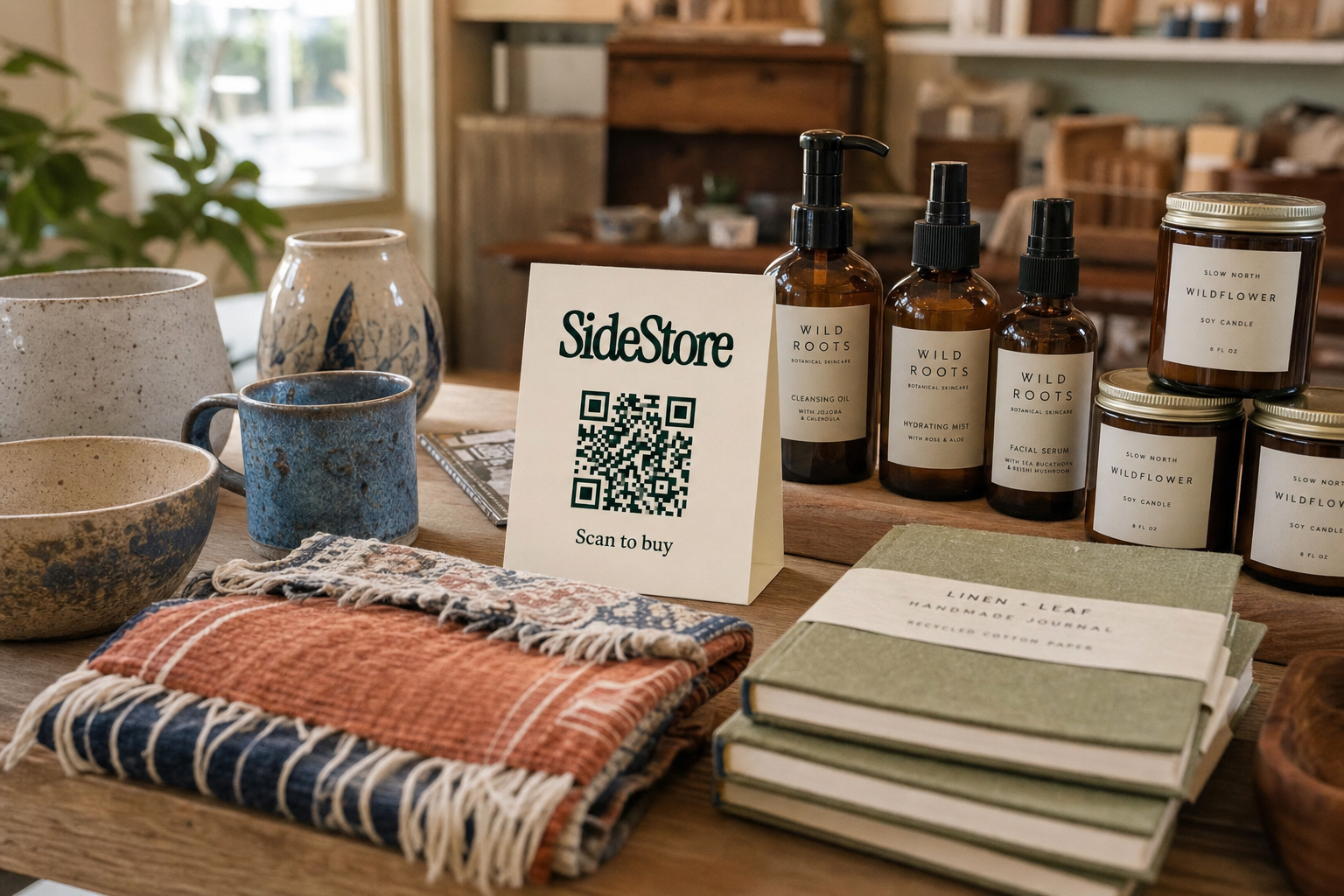
Five sourcing models cover the overwhelming majority of boutique inventory decisions: wholesale, consignment, dropshipping, trade show buying, and overseas sourcing. Each has a distinct capital requirement, margin profile, and risk level. Understanding the difference before you spend a dollar is the most practical thing you can do.
Wholesale is the classic route. You buy from a brand or distributor in bulk, typically at 40, 60% below the recommended retail price, and mark up to sell. The constraint is the minimum order quantity, or MOQ: many wholesale suppliers require orders of 6, 12 units per style, and some set a minimum dollar spend per order. Margins are solid, commonly 50, 60% gross on the retail price, but unsold stock sits on your shelves at your cost.
Consignment flips the risk entirely. A maker places products with your boutique and you pay only after a sale, splitting the revenue at an agreed rate. You carry no buying cost, no dead stock risk. The mechanics are covered more fully in Section 5, and selling on consignment explains the model from both sides.
Dropshipping means you list products you never physically hold. When a customer orders, the supplier ships direct. Zero inventory cost, but margins are typically thinner than wholesale and you have less control over packaging and fulfilment speed.
Trade show buying gets you access to curated, often exclusive, brands in a concentrated format. You meet the supplier, see samples in person, and negotiate terms. The trade-off is the cost of attendance and the expectation that you will place an order on the day.
Overseas sourcing, predominantly through platforms connecting buyers with manufacturers in Asia, offers the highest potential margins and the ability to create private-label or custom products. Lead times are long (commonly 60, 120 days), MOQs are higher, and you carry full quality and import-duty risk.
Want to see what's available to buy right now? Boutique inventory for sale pulls together current sourcing options worth knowing about.
Sourcing Models Compared: Risk, Cost, and Margin at a Glance
The right sourcing model depends on your budget and your stage. This table lets you compare every option on the four factors that matter most: what you spend before you sell anything, what you keep after you do, who holds the risk if nothing sells, and which stage of boutique growth each model suits best.
| Sourcing Model | Upfront Cost | Typical Margin | Inventory Risk | Best For |
|---|---|---|---|---|
| Wholesale | Medium, High (MOQ-driven) | ~50, 60% gross | You hold it | Established categories with proven demand |
| Dropshipping | None | ~15, 30% gross | Supplier holds it | Testing new products with zero capital |
| Consignment | None | Agreed split (varies) | Maker holds it | Testing new makers or categories, low-risk curation |
| Trade Show | Medium (travel + orders) | ~50, 60% gross | You hold it | Scaling boutiques wanting curated, exclusive stock |
| Overseas Sourcing | High (large MOQs) | ~60, 70%+ gross | You hold it | Private-label or custom products at volume |
For an ongoing view of how to keep these models working together once you're live, boutique inventory management is a useful next read.
Wholesale: The Classic Route, and What It Actually Costs
Wholesale sourcing means buying products at a discount from a brand or distributor and reselling at a margin. It is the most familiar model, and for good reason: margins are solid, stock is yours to photograph and ship on your own terms, and the supplier relationship is straightforward. The real constraint is capital.
MOQs are the first hurdle. Most wholesale suppliers set a minimum order per style, per season, or per total order value. A small clothing brand might require six pieces per colourway; a gift supplier might set a £200 minimum per order. Neither figure is huge in isolation, but across 15, 20 SKUs the upfront spend adds up quickly.
The second constraint is timing. Wholesale inventory, especially in fashion and seasonal categories, is ordered months ahead of when you need it. You are committing capital to stock that will not arrive for 8, 12 weeks and will not sell for weeks or months after that.
Where do boutique owners find wholesale suppliers? Trade directories, brand websites, and industry-specific wholesale platforms all list suppliers by category. Attending a single buying market is one of the more efficient ways to build a shortlist fast, because you can assess quality in person before committing.
The honest trade-off: wholesale delivers better margins than dropshipping or consignment, but you absorb every unit that does not sell. Have a plan before you buy. If stock stalls, how to get rid of boutique inventory that doesn't move is worth reading before you reorder, not after.
Consignment: Get Products on Your Shelf Without Buying Them
Consignment is the sourcing model that requires no upfront purchase. A maker places their products in your boutique space, you display and sell them, and you pay the maker their agreed share only after a sale completes. You never buy the stock. If it does not sell, the maker takes it back.
The mechanics are straightforward: you and the maker agree a split before anything goes on the shelf. Common arrangements sit somewhere in the 60/40 or 70/30 range (maker/boutique), though the exact terms vary by product type, volume, and relationship. You earn your share for providing the shelf space, the customer traffic, and the sales context. The maker earns theirs when a product moves.
This makes consignment especially useful for testing new categories. Before you commit wholesale capital to a candle range, a jewellery line, or a ceramics collection, consignment lets you gauge real customer interest with zero buying risk. If a product sells well, you have the data to negotiate a wholesale arrangement or simply continue on consignment.
Selling through consignment covers the model in depth from both the maker and boutique perspective.
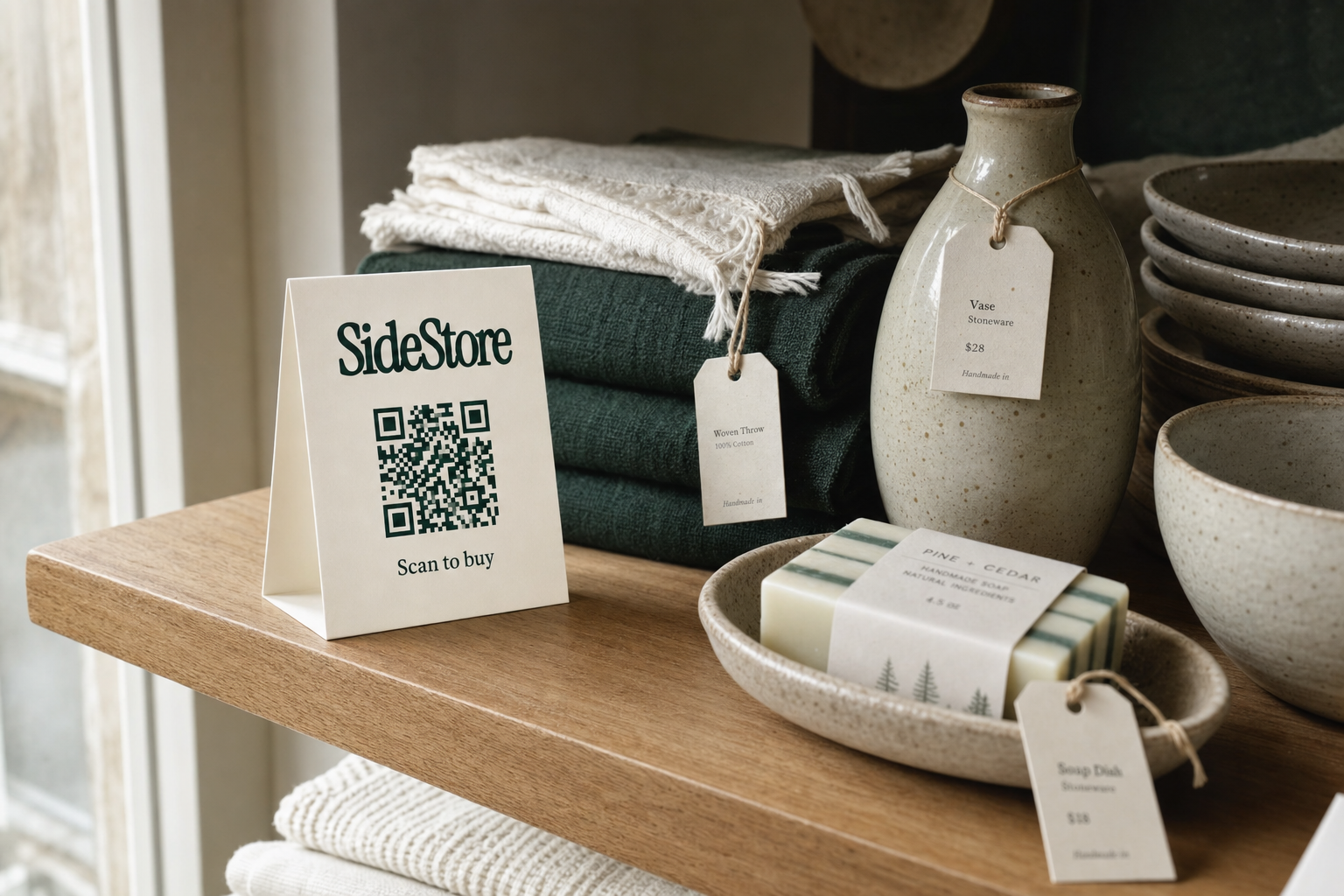
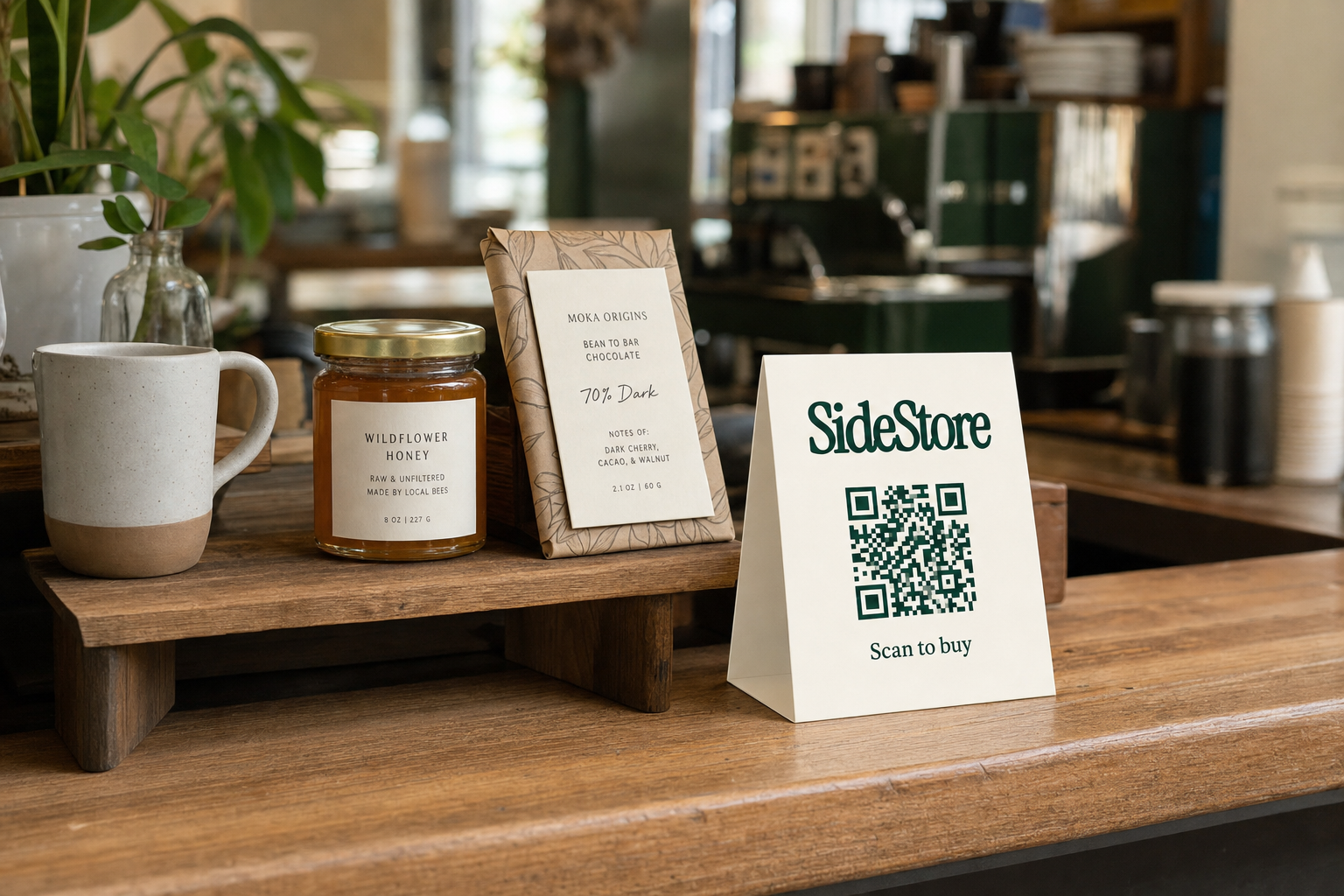
Where SideStore fits. SideStore's Retail Widget is the interface that handles consignment placements end to end. It manages checkout (including a scan-to-pay QR card that a maker can attach to their product or a merchant can display for an entire placement), live stock tracking, placement attribution, and automatic split payouts to the maker and the boutique. The QR checkout is one function of the Retail Widget, not the whole product: the Widget runs the full placement from first scan to final payout. You can read about how the SideStore QR card works to understand the checkout mechanics specifically.
For boutiques who want to curate without holding stock, consignment through SideStore is also worth reading about in the context of running a boutique without holding inventory. Consignment is not a workaround. It is a genuine partnership model where the maker and the boutique both benefit when the right product meets the right customer.
Dropshipping and Print-on-Demand: Zero Stock, Thinner Margins
Dropshipping lets you list and sell products you never physically hold. When a customer places an order, you forward it to a supplier who ships direct to the buyer. You pay the supplier's cost and keep the difference. Print-on-demand is a variant where items (apparel, prints, homeware) are produced only when ordered, with no pre-production cost at all.
The appeal is obvious: no upfront inventory spend, no storage, no fulfilment overhead. Margins are typically 15, 30% gross, narrower than wholesale, because you are paying the supplier to hold stock and ship on your behalf.
The practical limits are worth naming plainly. You have limited control over packaging, shipping speed, and the unboxing experience, all of which matter for boutique positioning. If a supplier runs out of stock or ships slowly, the customer complaint lands with you, not the supplier. Building a distinctive brand identity is harder when your products and packaging look identical to dozens of other boutiques using the same supplier catalogue.
Dropshipping suits testing and early-stage operations. Many boutique owners use it alongside wholesale or consignment, listing drop-shipped items to fill gaps in their range while their owned stock is in transit or selling down.
Trade Shows and Buying Markets: Curated Stock with a Higher Bar to Entry
Trade shows give you access to suppliers, brands, and independent makers in a single location, with samples to see and touch before you commit a penny. For boutique owners, the main advantage over online sourcing is curation: the brands at buying markets are typically vetted, which shortens your supplier research time.
The real costs are travel, accommodation, and the implicit expectation that you will place orders on the day. Many trade shows are open to registered buyers only, which adds a registration step before you even arrive. Entry-level order requirements at trade shows are often the same as direct wholesale, MOQs still apply.
Position trade shows as a scaling tool rather than a starting point. When you already know what sells in your boutique and are looking to expand your brand list or find exclusive ranges, a buying market is efficient. When you are still testing categories and margins, the upfront cost of attendance is harder to justify.
For makers and boutique owners who want distribution options beyond physical markets, alternatives to weekend markets for makers is worth a read, it covers models that do not require showing up in person to sell.
Overseas Sourcing: High Margins, High Complexity
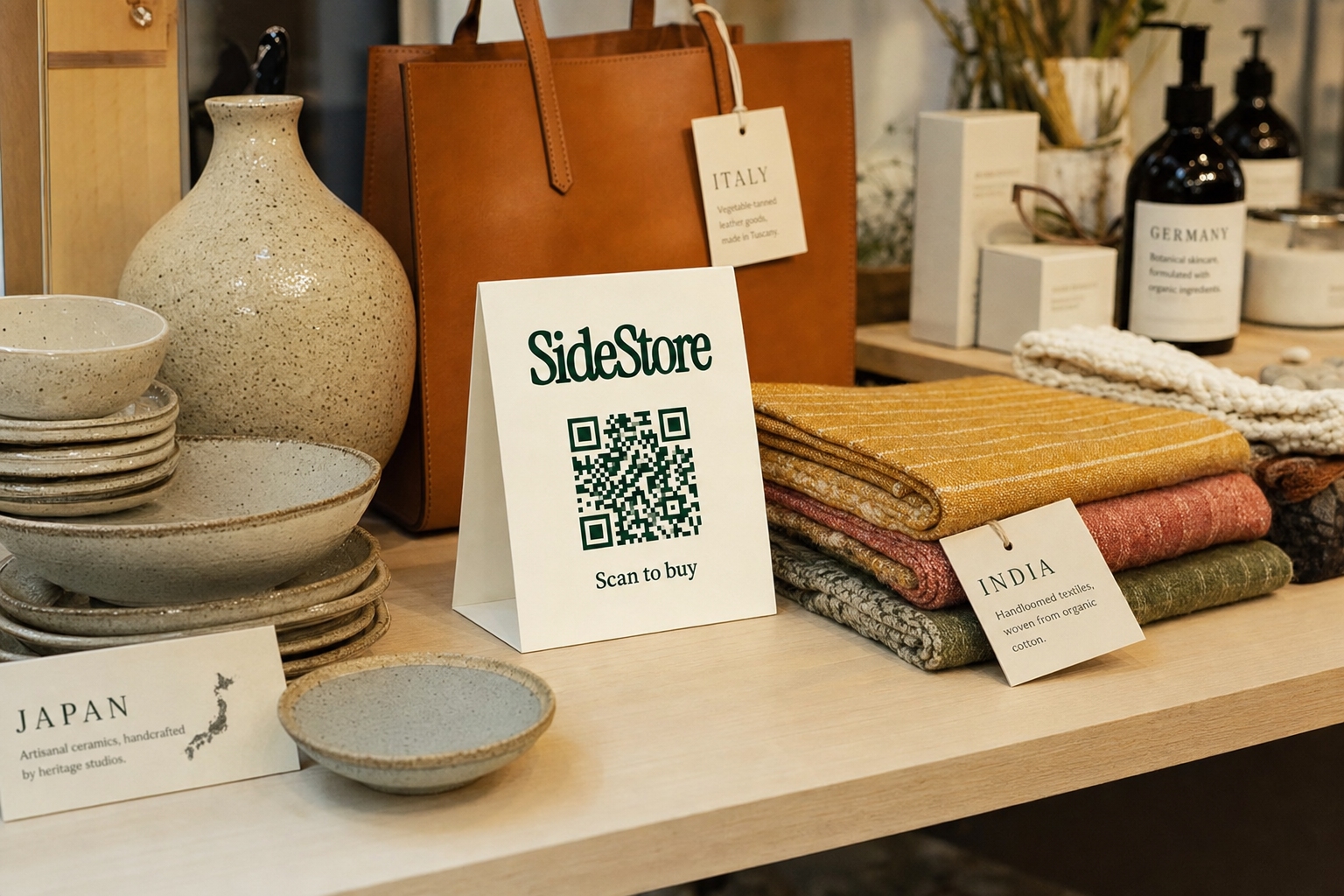
Overseas sourcing, working directly with manufacturers, commonly in Asia, offers the highest gross margin potential of any model and the ability to create custom or private-label products that no other boutique carries. That upside comes with real operational complexity.
Lead times are long. From placing a sample order to receiving production stock, the timeline commonly runs 60, 120 days. MOQs tend to be higher than domestic wholesale. Quality control requires either a trusted local agent or a sample-approval process you manage remotely. Import duties, shipping costs, and customs paperwork add cost and delay that narrow the headline margin.
Overseas sourcing makes most sense once you have validated a product category domestically and you are confident enough in demand to commit to larger volumes. Starting with a small sample order before placing a production run is standard practice, not optional. It is a high-reward model, but the complexity is proportional to the reward.
How Much Inventory Should You Start With?
Start with fewer SKUs than you think you need and more depth in each one than feels comfortable. The common mistake is spreading opening capital across too many product lines before you know what your customers actually buy.
For a wholesale-based launch, a practical starting framework is 3, 5 units per SKU across 10, 20 SKUs. That gives you enough range to look like a curated shop without tying up capital in lines that may not move. If a SKU sells out in the first two weeks, that is useful data; if it sits for two months, it is costing you cash and shelf space.
For consignment, the calculus is different. Because you carry no upfront cost, you can accept more SKUs from more makers without the same capital risk. The constraint shifts from capital to curation: too many consignment lines with too little sales focus still results in dead stock on your shelves, it just does not cost you cash. Focus on makers whose work fits your boutique's identity, and agree clear review periods so underperforming lines come off the shelf promptly.
The how much inventory to start with for an online boutique guide covers the quantity question in full, including how to calculate a practical open-to-buy budget.
Which Sourcing Model Fits Your Boutique Right Now?
The right sourcing model depends on two things: how much capital you can commit before your first sale, and how certain you are that a product category will actually sell in your boutique. Answer those two questions honestly and the right model becomes obvious.
Early stage, limited capital, uncertain demand: consignment and dropshipping carry the least risk and let you test without committing cash. Established boutique with proven categories and available capital: wholesale and trade show buying deliver better margins and more brand control. Significant volume with validated demand: overseas sourcing justifies the complexity.
In practice, most boutiques do not operate from a single model. A boutique might carry a wholesale core range, supplement with consignment from local makers, and use dropshipping to fill specific gaps. That blend is not a sign of indecision, it is sensible risk management. As your data improves, weight shifts toward the models with the best margin for your category.
For the long view on keeping all of this manageable, managing boutique inventory as you scale is the practical next step.
Frequently Asked Questions
These are the questions boutique owners ask most often about sourcing inventory. Each answer is designed to be useful on its own, without needing to read the full article first.
What is the cheapest way to get inventory for a boutique? Consignment is the cheapest sourcing model because you pay nothing upfront: a maker places products with you and you pay only after a sale, at the agreed split. Dropshipping is similarly low-cost for the boutique owner. Both models reduce capital risk significantly, though consignment gives you more control over product quality and curation.
Can I start an online boutique with no inventory? Yes. Both consignment and dropshipping allow you to launch without buying stock. Consignment lets you carry physical products in a real space without purchasing them; dropshipping handles fulfilment entirely through the supplier. A full breakdown of both options is in the guide on how to start a boutique with no inventory.
What is a good profit margin for a boutique? Gross margin varies by sourcing model. Wholesale and trade show buying typically deliver 50, 60% gross margin. Overseas sourcing can exceed that at volume. Dropshipping commonly sits at 15, 30%. Consignment margins depend on the split agreed with the maker. Net margin, after operating costs, varies widely, many boutique operators aim for 10, 20% net, though that figure depends heavily on overheads.
Where do boutiques find independent makers to stock? Local craft markets, design fairs, Instagram, and Etsy seller networks are common starting points. Consignment platforms like SideStore connect boutiques directly with makers who want physical placement without the overhead of their own shop. Reaching out directly to makers whose work fits your boutique's identity, even without a formal platform, often works well, particularly for makers who are earlier in their careers and actively looking for retail placement.
Start Where You Are: Getting Inventory Without Getting Stuck
The most important thing to know about how to get inventory for an online boutique is that there is no single right answer, only the right answer for your capital, your stage, and your category. Match the model to where you are now, not where you plan to be in two years.
Start with the lowest-risk model your business can actually use. If capital is limited, that means consignment or dropshipping. If you have a tested category and available budget, wholesale makes sense. Review the fit every season.
The cleanest next step toward zero-upfront sourcing is to explore how consignment works for boutiques and consider reaching out to one or two makers whose work fits your range. One consignment placement, managed well, tells you more than six months of planning.